Get cited by ChatGPT, Gemini citations

Mastering AI Citations: How to Get Cited by ChatGPT, Gemini, and Perplexity in 2026
In the rapidly evolving landscape of digital discovery, traditional SEO is no longer the sole arbiter of online visibility. As we navigate 2026, the rise of Generative Engine Optimization (GEO) has fundamentally altered how users interact with information. With a staggering 1.13 billion referral visits generated by AI platforms in June 2025, businesses can no longer afford to ignore the importance of AI-driven traffic. This represents a massive 357% increase in AI referral visits year-over-year, signaling a permanent shift in search behavior. Understanding what is Generative Engine Optimization (GEO) in 2026 is the first step toward securing your brand’s digital future.
When users ask questions to Large Language Models (LLMs) like ChatGPT, Gemini, or Perplexity, they are no longer looking for a list of blue links. They are looking for direct, authoritative answers. Achieving visibility in these environments requires a nuanced strategy that goes beyond standard keyword optimization. Currently, 78% of AI referral traffic is attributed to ChatGPT, making it the primary battleground for digital authority. To thrive in this environment, brands must focus on providing high-quality, verifiable information that AI models can trust. If you are struggling to adapt, learning about AI Engine Optimization is essential to ensure your content is not just crawled, but utilized by the next generation of search engines.
Mechanics of AI Crawling and Selection
To get cited by AI models, you must first understand the reality of how these bots interact with your website. According to a report by Cloudflare on AI crawling traffic, the distribution of bot activity is highly specific. Data reveals that 80% of AI crawler traffic is for model training, 18% for search, and 2% for user-initiated actions. This highlights a critical challenge: the crawl-to-click gap is widening, meaning AI bots are crawling more frequently while sending less traffic back to the source. This is compounded by a 32% year-over-year increase in overall AI crawling, which puts immense pressure on server infrastructure and content strategy.
The Two-Stage Selection Process
A major misconception in the industry is that being crawled is equivalent to being cited. In reality, there is a two-stage selection process for ChatGPT citations, and most publishers only optimize for the first stage. The first stage is retrieval, where the model identifies potentially relevant documents. The second stage is synthesis and citation, where the model evaluates the document for authority and relevance. Research suggests that only 15% of pages retrieved by ChatGPT are actually cited. This means that even if your content is indexed, it must pass a rigorous quality filter before a model will link to it.
- Authority Evaluation: AI models assess the domain and page authority using signals similar to traditional SEO.
- Comprehensiveness: Content that covers a topic from multiple angles is more likely to be used for synthesis.
- Relevance: The alignment between the specific user intent and the content’s core value proposition is paramount.
To improve your chances of passing these stages, consider implementing FAQ schema to provide clear, question-and-answer pairs that models can easily digest. By aligning your structure with how models “think,” you can significantly increase your odds of being one of the 15% that makes the cut.
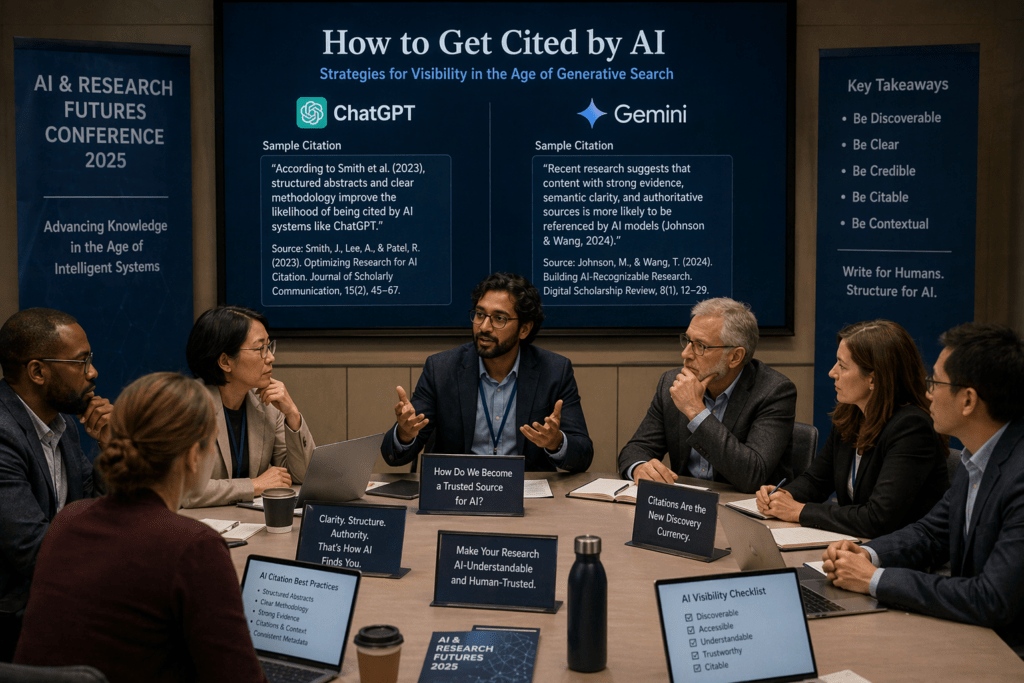
Data-Driven Optimization Tactics for GEO
If you want to move the needle on your AI visibility, you must implement specific, verifiable content enhancements. The study by Princeton/Georgia Tech on GEO optimization methods provides a roadmap for success. When you add verifiable statistics to your content, you can see up to a 40% increase in visibility. This is because LLMs are trained to prioritize information that is backed by hard data rather than anecdotal claims.
The Visibility Multiplier Effect
Visibility is not a monolithic metric; it is the result of layering multiple trust signals. By combining different optimization techniques, you create a content profile that is highly attractive to AI models. Here is how specific tactical changes impact your visibility:
- Adding statistics and source citations: Organizations using Radar, SE Ranking, Cloudflare, and Semrush report a 30-40% visibility lift.
- Citing authoritative external sources: Correlates with a 40% increase in visibility.
- Incorporating expert quotations: Drives a 35% increase in visibility for the page.
- Optimizing text fluency: Results in a 25% increase in visibility by reducing cognitive load for the model.
- Using structured lists: Increases visibility by 25% by making information scannable.
These figures demonstrate that AI optimization is not about “gaming” the system, but about enhancing the quality and structure of your information. Using advanced keyword research to identify topics where users are already seeking data-heavy answers will allow you to deploy these tactics for maximum ROI. If you are currently using older methods, you might want to look into top tubebuddy alternatives 2026 to find more modern, data-centric tools that align with these current GEO standards.
Tools to Monitor and Improve AI Visibility
Manual tracking of AI citations is inefficient and prone to error. You need a tech stack that monitors both traditional search metrics and AI-specific engagement. Tools like Radar and SE Ranking have begun to incorporate features that track AI-generated snippets and citations. Furthermore, using Cloudflare to manage your bot traffic ensures that you are not blocking the “good” AI crawlers while protecting your site from malicious scrapers.
Comparing Modern SEO Tools
To compete effectively in the era of Generative AI, you need data that goes beyond standard volume and difficulty metrics. The following table highlights key tools that can assist in your GEO journey.
| Tool | Primary Benefit | AI Citation Tracking |
|---|---|---|
| Semrush | Comprehensive SEO Suite | Limited/Beta |
| SE Ranking | Rank Tracking & Monitoring | Included in Enterprise |
| Cloudflare | Bot Management | N/A |
| ContentSERP | GEO & AI Optimization | High |
The tools listed above provide different layers of utility. While Semrush and SE Ranking offer the foundation for traditional SEO, specialized platforms like ContentSERP are designed specifically for the era of GEO. For those who rely on older processes, comparing ContentSERP vs TubeBuddy reveals why a focus on AI-ready content architecture is superior to legacy video-only optimization. Always remember that your choice of tools should facilitate better competitor analysis, allowing you to see which sources your rivals are using to capture AI citations.

The Role of Content Fluency and Structure
AI models prioritize content that is easy to process. This is why “text fluency” is a major ranking factor in 2026. If your content is filled with grammatical errors or is written in a disjointed manner, the model will struggle to extract the core value, leading to a lower citation probability. As mentioned previously, optimizing text fluency can improve visibility by 25%. This involves more than just good grammar; it involves logical flow, clear transitions, and the use of natural language that aligns with how users query AI models.
Structuring for Machine Readability
Structured lists, such as the ones used in this guide, act as signposts for AI crawlers. They break down complex information into digestible “chunks” that models can easily cite. When you organize content into tags, you are essentially providing the model with a ready-made bulleted answer that it can insert directly into its response. This is a primary technique for leveraging auto-internal linking and AI pillar pages to keep your content interconnected and authoritative.
Frequently Asked Questions
What is the significance of getting cited by ChatGPT or Gemini?
Getting cited by an AI model is the modern equivalent of a high-authority backlink, but with a more direct impact on user acquisition. When a user asks a question, the model’s citation acts as a “source of truth,” which builds immediate trust and authority for your brand. This leads to higher-intent traffic, as users are already in the middle of a research or decision-making process when they click your link.
Furthermore, these citations are increasingly becoming a part of the “answer engine” ecosystem. By being the cited source, you are positioning your brand as an expert in your niche, which helps in long-term brand building. In a world where organic search results are being pushed further down the page by AI responses, being the cited source is often the only way to remain visible at the top of the SERP.
How can I increase my chances of getting cited by these models?
Increasing your chances of being cited requires a three-pronged approach: authoritative data, clear structure, and high-quality content. First, ensure your content is backed by verifiable statistics and primary research. AI models are programmed to favor factual, cited information over opinion-based content. Second, use structured data and clear headings to make your content easy for the AI to parse and synthesize.
Finally, focus on answering the “why” and “how” behind your topics. Models prefer comprehensive content that provides a complete answer in one place, rather than content that requires the user to click multiple links to find the full story. By becoming the “go-to” source for a specific sub-topic, you maximize the likelihood that an LLM will select your content as its primary reference for that query.
How to get references from Gemini?
Gemini Code Assist and other advanced Gemini integrations are designed to help users find information efficiently. To increase your chances of being referenced, ensure your content is highly technical and accurate, as Gemini is frequently used for coding and deep research tasks. Providing clear code snippets and documentation can help you get cited in technical queries.
Additionally, keeping your content updated is crucial. Since Gemini often uses real-time web browsing to answer queries, outdated content will be ignored in favor of fresher, more relevant data. Use tools to monitor your site’s indexing status and ensure your most authoritative content is always accessible to the Gemini bot.
Can Gemini generate citations?
Yes, Gemini can generate citations, particularly when integrated into development environments or research tools. Gemini Code Assist can be used in supported IDEs to generate code, provide conversational help, and offer features like source citations. This makes it a powerful tool for developers who need to verify the origin of the information they are using.
For content creators, this means that if your content is high-quality and well-structured, Gemini is more likely to cite it when providing technical or factual answers. The key is to ensure that your site follows best practices for machine readability, such as having a clear authorship profile and providing consistent, accurate data that the model can confidently point toward as a reliable source.
What is the crawl-to-click gap?
The crawl-to-click gap refers to the phenomenon where AI bots visit a website frequently but do not necessarily drive traffic back to that site through user-initiated clicks. This is a growing concern for publishers, as it means that while your content is being used to train or inform the model, you may not be receiving the direct referral traffic you expect.
To combat this, you must focus on creating content that is “citation-worthy.” This means providing unique value—such as original research, proprietary data, or unique perspectives—that the model cannot easily synthesize without pointing the user back to your site. If your content is purely generic, the model will likely summarize it without providing a citation, widening the gap further.
How do AI models evaluate authority?
AI models evaluate authority by analyzing a combination of traditional SEO signals and new, AI-specific metrics. These include the domain’s historical credibility, the presence of expert citations within the content, and the overall fluency and depth of the information provided. Models also cross-reference information across multiple trusted sources to verify the accuracy of a claim.
If your site consistently provides accurate, well-cited information that aligns with consensus in your industry, the models will learn to treat your site as a trusted authority. This involves building a strong E-E-A-T (Experience, Expertise, Authoritativeness, and Trustworthiness) profile, which is becoming just as important for AI engines as it is for traditional Google search.
Are AI crawlers different from Googlebot?
Yes, AI crawlers are distinct from traditional search engine bots like Googlebot. While Googlebot’s primary purpose is to index pages for a keyword-based search index, AI crawlers are focused on extracting information for training models or for providing direct answers in a conversational interface. This requires a different technical approach.
You should not block these crawlers, but you should monitor them using tools like Cloudflare to ensure they aren’t causing performance issues on your site. Understanding the difference between these crawlers is key to optimizing your site for both traditional SEO and the new era of generative search.
Is GEO the same as SEO?
Generative Engine Optimization (GEO) and Search Engine Optimization (SEO) are related but distinct disciplines. SEO is focused on ranking for keywords in a traditional search index, whereas GEO is focused on getting cited as an authoritative source in a generative AI response. While they share many foundational principles, such as high-quality content, GEO requires a deeper focus on factual accuracy and structured data.
To succeed in 2026, you must adopt a hybrid strategy that targets both. By optimizing for both Google’s traditional search index and the AI models’ citation engines, you can maximize your visibility across all channels. If you are looking for more guidance, checking out resources on Googlebot Search can provide the necessary foundation for your traditional SEO efforts.
Conclusion
The transition toward generative search is not a passing trend; it is the new reality of how information is consumed. With the volume of AI-generated referral traffic increasing by 357% year-over-year, the opportunity for brands that prioritize GEO is immense. By moving beyond legacy SEO tactics and focusing on data-driven content, clear structure, and authoritative citations, you can position your brand to be the primary reference point for users interacting with ChatGPT, Gemini, and beyond.
Remember that the goal is to be one of the elite 15% of pages that AI models actually cite. This requires a commitment to quality that transcends simple keyword optimization. You must provide value that an AI model finds “citation-worthy”—unique data, expert insights, and a logical structure that makes the AI’s job of synthesis easier. If you are ready to take your strategy to the next level, start by auditing your current content for these GEO signals. For a deep dive into how to execute this, explore our comprehensive guide on what is Generative Engine Optimization (GEO) in 2026. Don’t wait for the traffic to disappear; start optimizing your digital footprint for the AI-first web today.
