Who Is The Father Of AI
Who Is the Father of AI? The Complete History of Artificial Intelligence’s Founding Pioneer
John McCarthy is universally recognized as the father of artificial intelligence. In 1956, McCarthy coined the term “artificial intelligence” at the groundbreaking Dartmouth Conference, establishing the field as we know it today.
The story of AI’s creation extends far beyond a single moment. It involves decades of theoretical work, bold experimentation, and visionary thinking from pioneers who believed machines could think. Understanding who shaped this revolutionary field helps us grasp how modern AI systems evolved—from basic logic puzzles to the sophisticated language models transforming industries in 2026.
John McCarthy: The Man Who Named Artificial Intelligence
Born in 1927, John McCarthy became one of the most influential computer scientists in history. His greatest contribution wasn’t inventing a specific algorithm or building a particular machine. Instead, McCarthy gave the field its name and provided the philosophical foundation for decades of research to follow.
McCarthy’s background in mathematics and logic made him the ideal person to formalize the concept of machine intelligence. He understood that if humans could describe logical processes, machines could execute them. This insight became the cornerstone of AI research.
The Dartmouth Conference: Birth of AI as a Formal Field
The 1956 Dartmouth Conference stands as the official birth of artificial intelligence as an academic discipline. McCarthy organized this workshop with fellow pioneers including Marvin Minsky, Claude Shannon, and Nathaniel Rochester. The conference brought together the brightest minds in computing to explore a radical question: Could machines simulate human intelligence?
The participants believed they could solve the problem of artificial intelligence within a single summer. While their timeline proved optimistic, the conference succeeded in establishing AI as a legitimate field of study. It created a shared vocabulary and research agenda that guided computer scientists for the next two decades.
McCarthy’s Technological Contributions Beyond the Name
While McCarthy’s naming of AI remains his most famous contribution, his technical innovations were equally groundbreaking. He didn’t simply theorize about intelligent machines—he built the tools that made AI research possible.
The Development of LISP Programming Language
In the late 1950s, John McCarthy developed the LISP programming language, which became the dominant language for AI research for decades. LISP (List Processing) was revolutionary because it allowed programmers to represent knowledge symbolically and manipulate it programmatically.
LISP’s elegant design made it perfect for AI applications. Researchers could write programs that reasoned about problems, manipulated symbols, and learned from examples. The language remained central to AI development through the 1980s and influenced how researchers thought about computation itself. Modern languages like Python now dominate AI development, but LISP’s conceptual contributions persist in how we structure machine learning algorithms today.
Time-Sharing and Computing Infrastructure
Beyond LISP, McCarthy proposed the concept of time-sharing in computers. This innovation allowed multiple users to access a single computer simultaneously, democratizing access to computing resources. Time-sharing made AI research more practical by enabling collaborative work and reducing the cost of experimentation.
This infrastructure contribution often goes unnoticed, but it was crucial. Without time-sharing, AI research would have remained confined to institutions with massive computing budgets. McCarthy’s vision of shared computational resources helped establish the collaborative research culture that defines AI development today.
The Broader Context: AI Before McCarthy’s Coinage
McCarthy didn’t invent the concept of artificial intelligence from nothing. The idea of creating thinking machines had fascinated philosophers and mathematicians for centuries. Understanding the intellectual lineage helps explain why McCarthy was perfectly positioned to formalize the field in 1956.
Early Conceptual Foundations
The groundwork for AI thinking began long before computers existed. In 1921, Karel Čapek used the term “artificial people” in his play “R.U.R.” (Rossum’s Universal Robots). While fictional, Čapek’s work captured the imagination of scientists and philosophers who wondered whether machines could truly think.
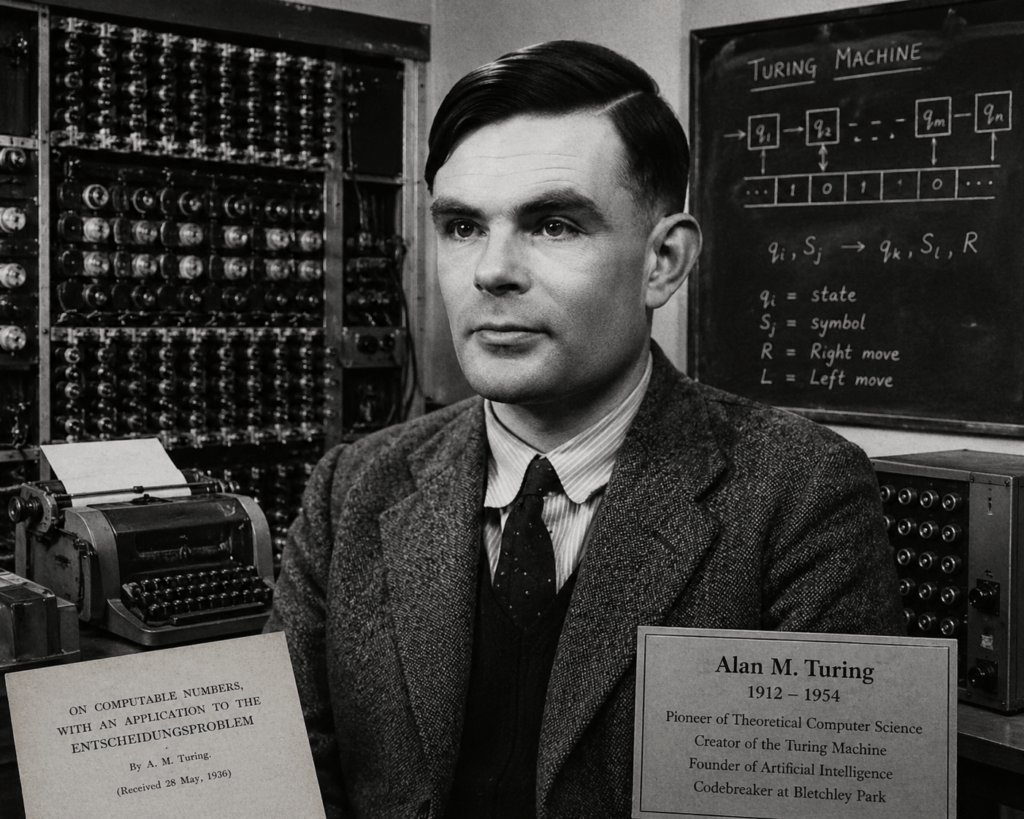
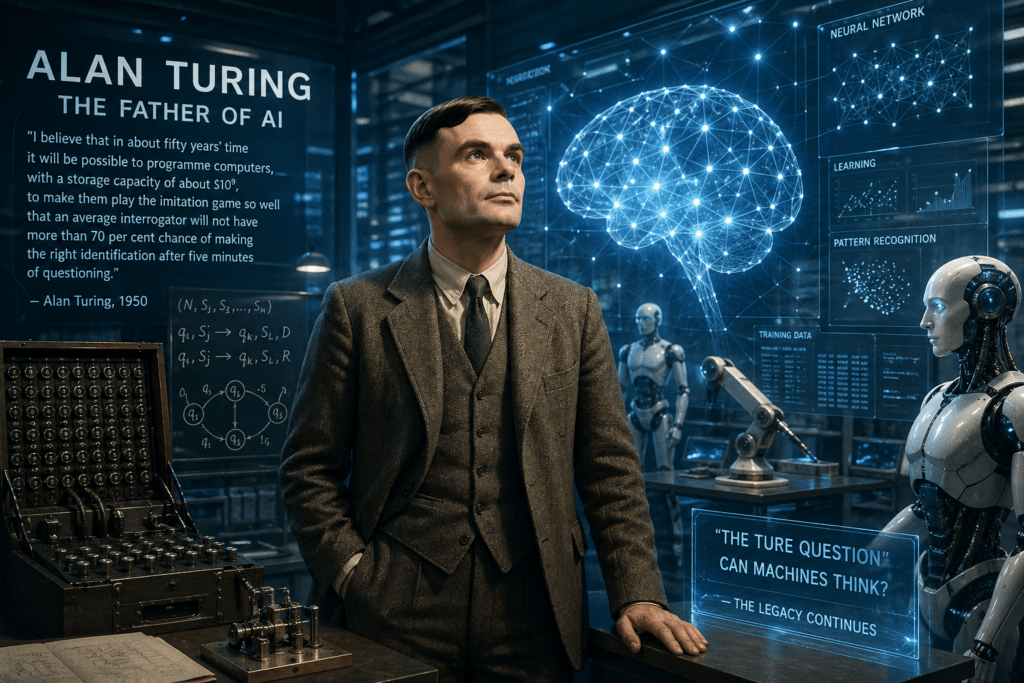
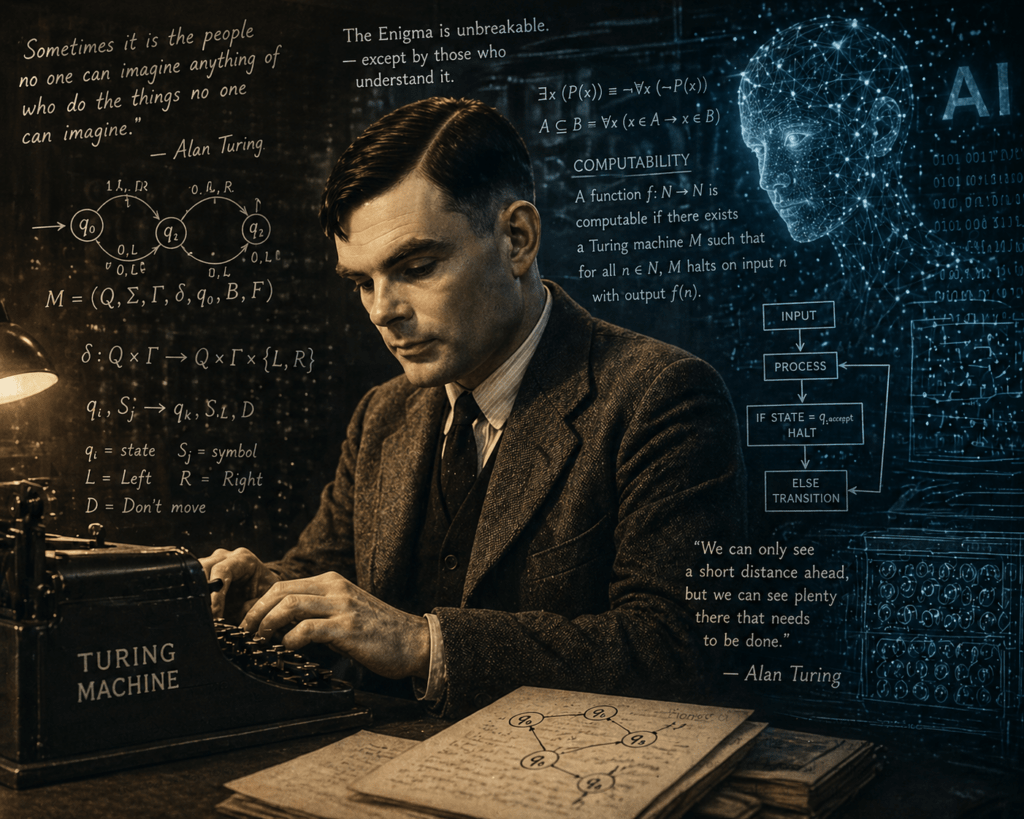
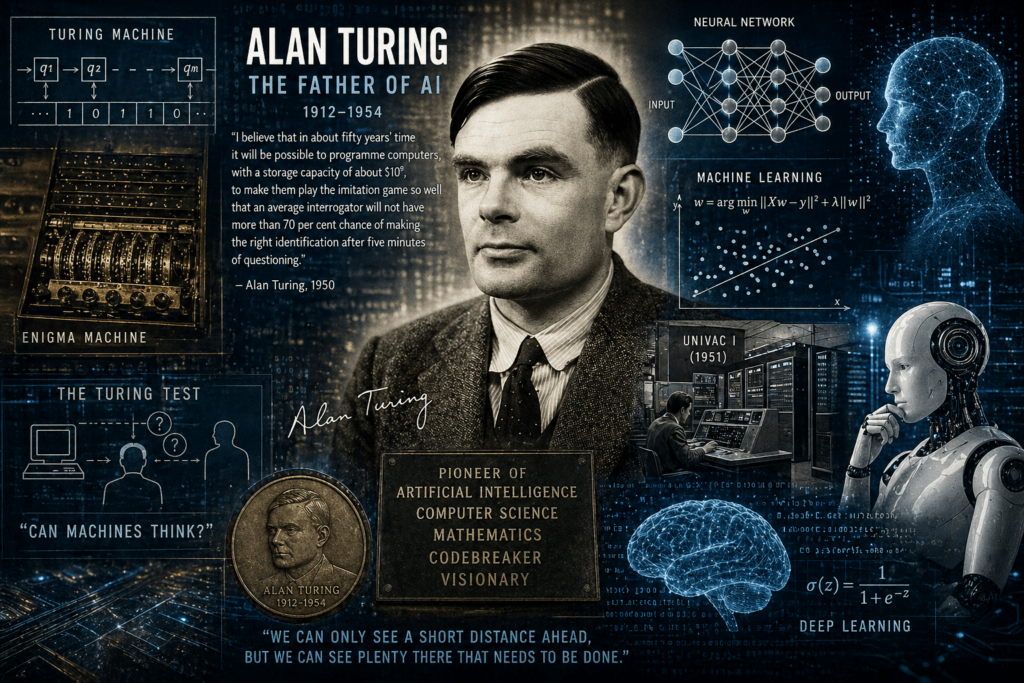
Alan Turing advanced this conversation significantly. His 1950 paper “Computing Machinery and Intelligence” posed the famous question: “Can machines think?” Turing proposed the Turing Test as a practical measure of machine intelligence. His theoretical work created the philosophical framework that McCarthy and others would build upon at Dartmouth. When McCarthy coined “artificial intelligence” in 1956, he was synthesizing decades of theoretical work into a cohesive research agenda.
The Evolution of AI: From McCarthy’s Era to Modern Deep Learning
The field McCarthy founded has undergone dramatic transformations. Understanding this evolution shows how AI progressed from symbolic reasoning to the neural networks and machine learning systems dominating 2026.
The Symbolic AI Era and the AI Winter
McCarthy’s approach emphasized symbolic reasoning—representing knowledge as logical statements and rules. This worked well for specific problems like chess and theorem proving. However, symbolic AI struggled with tasks requiring pattern recognition or learning from data. By the 1970s, funding dried up as promised breakthroughs failed to materialize. This period became known as the “AI Winter.”
The symbolic approach had fundamental limitations. Real-world problems rarely fit neatly into logical rules. Machines needed to learn from examples, not just follow predetermined logic. This realization set the stage for a fundamental shift in how researchers approached AI.
The Machine Learning Revolution
During the 1980s and 1990s, the transition to machine learning occurred. Rather than hand-coding knowledge, researchers developed algorithms that could learn patterns from data. This shift represented a philosophical move away from McCarthy’s symbolic reasoning toward statistical approaches.
Geoffrey Hinton, Yann LeCun, and Alex Krizhevsky pioneered deep learning techniques that would transform AI. Their work on neural networks, particularly convolutional neural networks, proved that machines could learn visual patterns with remarkable accuracy. By the 2000s, deep learning began producing practical breakthroughs in image recognition, speech processing, and language understanding.
The Big Data and Modern AI Era
In the 21st century, the era of big data emerged. Massive datasets combined with powerful computing resources and sophisticated neural network architectures created unprecedented opportunities. Companies like Google, OpenAI, and DeepMind built systems that could process billions of data points and identify patterns humans couldn’t perceive.
Today’s large language models and transformer architectures represent the culmination of this evolution. While McCarthy’s symbolic logic approach proved limited, his vision of creating intelligent machines proved prescient. Modern AI systems solve problems McCarthy could only imagine, yet they rest on foundations he helped establish.
Why McCarthy Deserves the Title “Father of AI”
Several factors justify McCarthy’s designation as AI’s founding figure. First, he named the field and gave it conceptual coherence. Before Dartmouth, researchers worked on isolated problems without a unifying framework. McCarthy created that framework.
Second, McCarthy’s technical innovations—particularly LISP—provided the tools researchers needed. He didn’t just theorize; he built infrastructure that enabled others to pursue his vision.
Third, McCarthy’s optimism and intellectual leadership inspired a generation of researchers. He believed machine intelligence was achievable and convinced others to dedicate their careers to the pursuit. His foundational work on who is the father of AI established the intellectual tradition that continues today.
Fourth, McCarthy lived long enough to see his field transform and mature. He passed away in 2011, witnessing the deep learning revolution that vindicated his original vision of creating thinking machines, even if the technical approach differed from his initial symbolic logic framework.
Other Pioneering Figures in AI’s History
While McCarthy earned the “father” title, AI’s development involved many crucial contributors. Marvin Minsky co-founded MIT’s AI laboratory and made fundamental contributions to neural networks and cognitive science. Alan Turing’s theoretical work provided the philosophical foundation for the entire field.
Geoffrey Hinton revolutionized deep learning with his work on backpropagation algorithms. Yann LeCun developed convolutional neural networks that transformed computer vision. Ilya Sutskever and his team at OpenAI created large language models that captured global attention. Each of these pioneers built on McCarthy’s foundation while pushing the field in new directions.
| Pioneer | Key Contribution | Era | Impact on Modern AI |
|---|---|---|---|
| John McCarthy | Coined “AI”, founded Dartmouth Conference, developed LISP | 1950s–1970s | Established AI as formal discipline; symbolic reasoning framework |
| Alan Turing | Theoretical foundations; Turing Test | 1950s | Philosophical framework for machine intelligence |
| Marvin Minsky | Neural networks research; cognitive science | 1950s–1980s | Influenced connectionist approaches to AI |
| Geoffrey Hinton | Backpropagation; deep learning algorithms | 1980s–present | Enabled modern neural network training |
| Yann LeCun | Convolutional neural networks | 1990s–present | Foundation for computer vision systems |
| Ilya Sutskever | Large language models and transformers | 2010s–present | Created ChatGPT and modern conversational AI |
The Legacy of McCarthy’s Vision in 2026
In 2026, artificial intelligence has become integral to society. From healthcare diagnostics to autonomous vehicles, from content generation to scientific research, AI systems make decisions that affect billions of people daily. McCarthy’s vision of creating intelligent machines has been realized, though often through approaches he didn’t anticipate.
The symbolic logic approach McCarthy championed proved limited for real-world problems. Yet his fundamental belief—that machines could exhibit intelligent behavior—proved absolutely correct. Modern AI systems don’t reason through explicit logical rules like McCarthy imagined. Instead, they learn patterns from massive datasets using neural networks.
Despite this technical divergence, McCarthy’s intellectual legacy remains strong. He established the research culture, academic institutions, and conceptual frameworks that made modern AI possible. Without his work at Dartmouth, without LISP, without his tireless advocacy for the field, AI research might have developed along a completely different trajectory.
For those seeking to understand AI’s capabilities and limitations today, understanding McCarthy’s foundational work provides crucial context. His optimism about machine intelligence proved justified. His specific technical approaches, while superseded, reflected genuine insights about computation and intelligence. When you interact with an AI system in 2026, you’re benefiting from a research tradition McCarthy initiated over seven decades ago. If you’re looking to understand how AI systems are evaluated and compared in modern contexts, tools like getting cited by ChatGPT and Gemini citations can help you understand how AI systems reference and evaluate information sources.
Frequently Asked Questions
Who is considered the father of Artificial Intelligence?
John McCarthy is universally recognized as the father of artificial intelligence. He coined the term “artificial intelligence” in 1956 and organized the Dartmouth Conference, which established AI as a formal academic field. McCarthy’s theoretical work, combined with his technical innovations like the LISP programming language, provided the foundation upon which all subsequent AI research has been built. While many pioneers contributed to AI’s development, McCarthy’s role in naming the field and creating its research framework earned him the “father of AI” designation.
What year did John McCarthy coin the term “artificial intelligence”?
John McCarthy coined the term “artificial intelligence” in 1956 at the Dartmouth Conference. This summer workshop brought together leading computer scientists to explore whether machines could simulate human intelligence. The conference lasted six to eight weeks and included McCarthy, Marvin Minsky, Claude Shannon, and Nathaniel Rochester. While the participants were optimistic about solving AI within a single summer, the conference succeeded in establishing AI as a legitimate academic discipline with a shared vocabulary and research agenda that would guide the field for decades.
What are the main types of artificial intelligence?
Modern AI encompasses several distinct approaches: Machine Learning (ML) enables systems to learn patterns from data without explicit programming. Deep Learning uses neural networks with multiple layers to identify complex patterns. Natural Language Processing (NLP) allows machines to understand and generate human language. Robotics combines AI with physical systems to enable autonomous action. Computer Vision enables machines to interpret visual information from images and video. Each of these fields has evolved from McCarthy’s original vision while incorporating techniques he never imagined, particularly neural networks and statistical learning approaches that dominate modern AI development.
What was the Dartmouth Conference and why was it important?
The Dartmouth Conference in 1956 was a summer workshop organized by John McCarthy that brought together pioneers in computing and mathematics to explore artificial intelligence. Attendees included McCarthy, Marvin Minsky, Claude Shannon, and Nathaniel Rochester. The conference was important because it established AI as a formal academic field, created a shared vocabulary and research agenda, and inspired decades of research. While the participants were overly optimistic about near-term progress, the conference succeeded in creating an intellectual community dedicated to understanding machine intelligence. It remains the symbolic birth of AI as a discipline.
How did John McCarthy contribute to computer science beyond naming AI?
Beyond coining “artificial intelligence,” McCarthy made several crucial technical contributions to computer science. He developed LISP, a revolutionary programming language designed for symbolic manipulation and reasoning. LISP became the dominant language for AI research through the 1980s and influenced how researchers approached computation. McCarthy also proposed the concept of time-sharing in computers, which allowed multiple users to access a single computer simultaneously. This innovation democratized access to computing resources and made collaborative AI research practical. These technical contributions provided the tools and infrastructure that made AI research possible at scale.
Conclusion
John McCarthy’s designation as the father of artificial intelligence reflects his extraordinary contributions to computer science and philosophy. By coining the term “artificial intelligence” in 1956 and organizing the Dartmouth Conference, McCarthy established the intellectual framework that has guided AI research for seven decades. His technical innovations—particularly the LISP programming language and time-sharing concepts—provided the tools researchers needed to pursue his vision of creating intelligent machines.
While McCarthy’s specific approach to AI through symbolic logic proved limited, his fundamental insight proved correct: machines could exhibit intelligent behavior. Modern AI systems, from large language models to computer vision systems, represent the fulfillment of McCarthy’s original vision, even if the technical path diverged from his initial expectations. Understanding McCarthy’s foundational work helps explain how AI evolved from theoretical speculation to practical systems transforming society in 2026.
For researchers and professionals seeking to understand AI’s history and current capabilities, McCarthy’s legacy remains essential. His work established the research institutions, academic traditions, and conceptual frameworks that continue to guide AI development. When exploring how modern AI systems are evaluated and compared, resources like ContentSERP vs VidIQ 2026 comparisons can help you understand how different tools assess information quality—a concern McCarthy grappled with when designing systems for symbolic reasoning. To fully appreciate AI’s trajectory from McCarthy’s era to today, studying both his successes and limitations provides invaluable perspective on where artificial intelligence is heading next.
