How to Do Local Keyword Research for Small Businesses in India
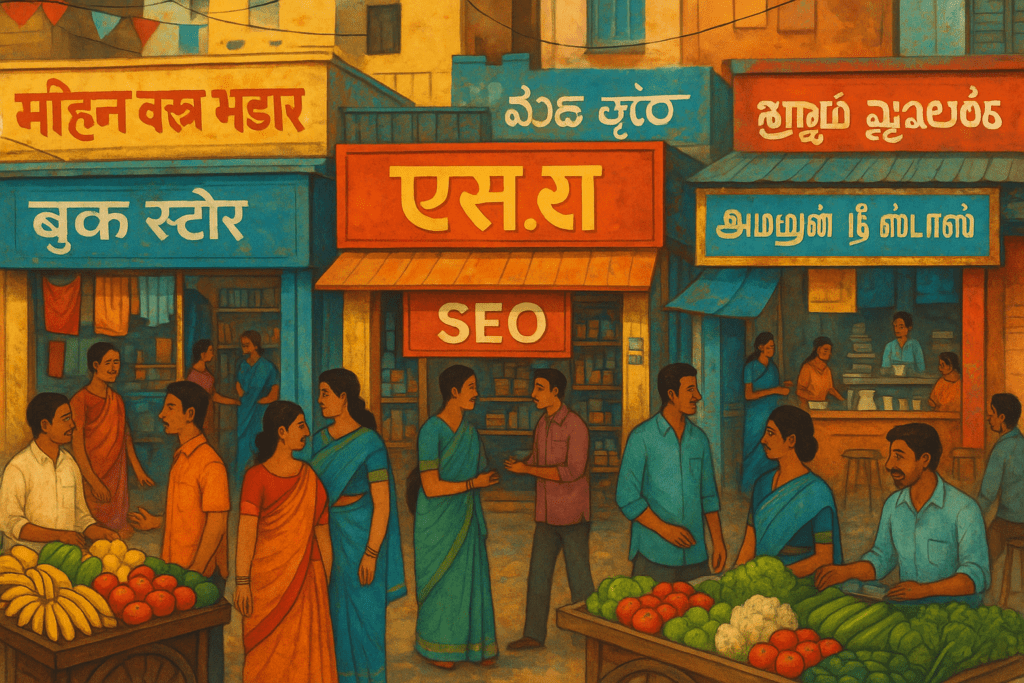
Local Keyword Research in India: Mastering Local SEO for Maximum Visibility
In today’s digital age, having a strong online presence is crucial for businesses, especially for those targeting local markets. In India, where regional preferences and cultural diversity play a significant role in consumer behavior, local SEO and geo-targeted keywords are more important than ever. Businesses that want to stand out in local search results must understand the nuances of local keyword research India, city-based SEO, and geo-targeted keywords. This comprehensive guide will walk you through everything you need to know to enhance your local search optimization in the Indian market.
Why Local Keyword Research Matters in India
India is home to over 1.3 billion people, speaking multiple languages and spread across thousands of cities and towns. This diverse demographic makes local SEO India a vital component of any digital marketing strategy. Unlike global brands that use broad keywords, local businesses need to focus on city-based keywords to connect with potential customers in their immediate area.
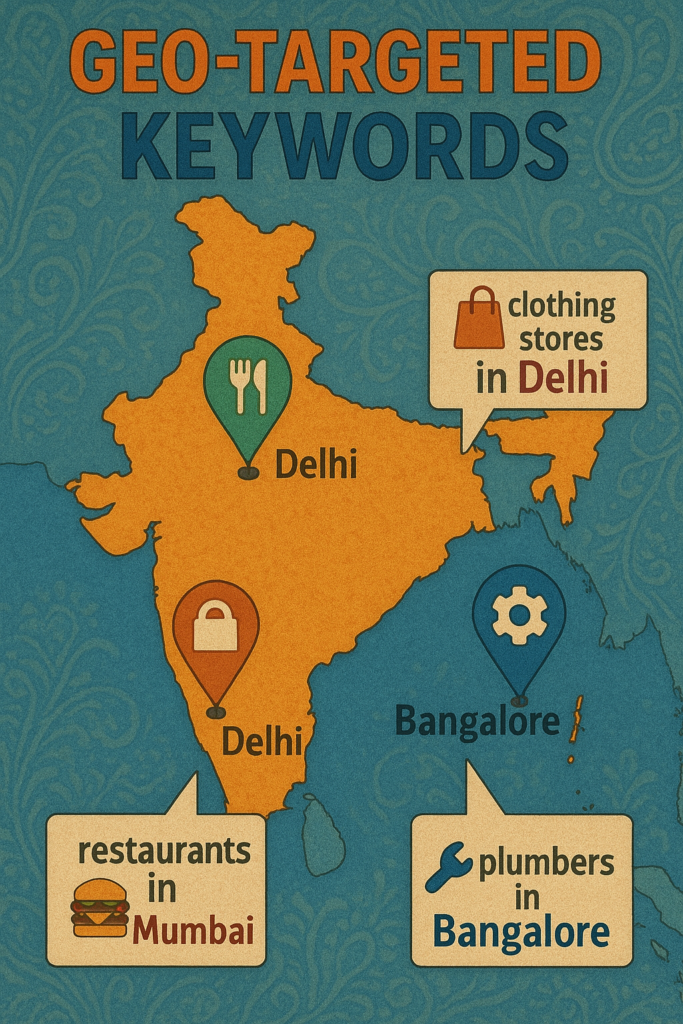
Local keyword research helps you understand what your target audience is searching for. For example, a restaurant in Mumbai might find that people search for “best biryani in Mumbai” rather than just “best biryani.” These geo-targeted keywords are more specific and have higher conversion potential because they indicate local intent.
Moreover, Google’s algorithm favors local businesses when someone searches for a local query. If you’re a small business owner in Delhi, having optimized local keywords increases the chances of your website appearing in the top local search results. This is where local search optimization becomes a game-changer for businesses looking to dominate the local market.

Step-by-Step Guide to Local Keyword Research in India
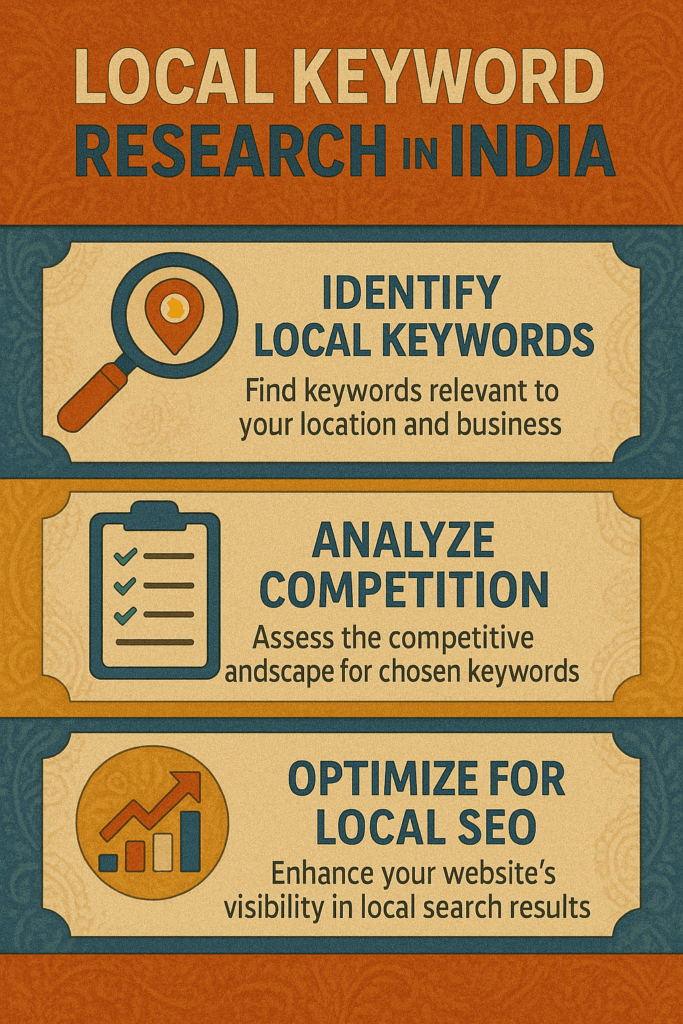
Performing effective local keyword research India involves several strategic steps. Let’s break it down into manageable parts to help you get started.
1. Understand Your Local Audience
Before diving into keyword research, it’s essential to understand your local audience. Consider the following:
- What languages do they speak? (e.g., Hindi, Tamil, Telugu, etc.)
- What are their search habits?
- What are the popular local terms or phrases?
For example, if you’re targeting the southern Indian market, using keywords in regional languages like Tamil or Kannada can significantly boost your local SEO performance.
2. Use Local Keyword Research Tools
There are several local keyword research tools available that cater specifically to the Indian market. Some of the most popular ones include:
- Google Keyword Planner
- ContentSERP
- Semrush
- Ahrefs
- Ubersuggest
- Local SEO tools like BrightLocal or Moz
These tools help you find high-volume keywords with low competition. For instance, using Google Keyword Planner with filters for specific Indian cities can reveal city-specific keywords that your competitors might be overlooking.
3. Analyze Competitors
Competitor analysis is a powerful part of local keyword research India. Identify the top competitors in your area and use tools like Ahrefs or Semrush to analyze their keywords. Look for:
- Which keywords are they ranking for?
- What kind of content are they creating?
- What is their backlink profile?
This analysis will give you insights into what’s working in your local market and help you identify keyword opportunities that you can target.
4. Create a Keyword List
Once you’ve gathered data, create a list of relevant city-based keywords. Categorize them into:
- Primary keywords (exact match phrases)
- Secondary keywords (related terms)
- Long-tail keywords (specific phrases with low competition)
For example, a primary keyword could be “best yoga classes in Bangalore.” In contrast, a long-tail keyword might be “yoga for beginners near me in Bangalore.” Long-tail keywords are especially useful for local businesses because they are more specific and have less competition.
5. Optimize On-Page Elements
After finalizing your keyword list, it’s time to integrate them into your website. Key areas to optimize include:
- Title tags
- Meta descriptions
- Header tags (H1, H2, H3)
- Image alt text
- URL slugs
For example, if you’re a local electrician in Chennai, your URL might look like this: www.yourwebsite.com/chennai-electrician-services. This helps both users and search engines understand the local context of your page.
Comparison of Local Keyword Research Tools in India
There are numerous tools available for local keyword research India, each with its own strengths and weaknesses. Let’s compare some of the most popular ones:
| Tool | Pros | Cons | Best For |
|---|---|---|---|
| Google Keyword Planner | Free, accurate search volume data, easy to use | Limited to Google ads, no keyword difficulty metrics | Beginners, budget-friendly keyword research |
| Ahrefs | Comprehensive keyword data, backlink analysis, content explorer | Premium tool, expensive | Advanced users, in-depth competitor analysis |
| Semrush | Keyword tracking, site audit, content marketing tools | Complex interface for beginners | Marketing agencies, SEO professionals |
| Ubersuggest | User-friendly interface, keyword difficulty metrics, content ideas | Less detailed data than Ahrefs or Semrush | Small businesses, content creators |
| BrightLocal | Local SEO tools, review tracking, local citation tools | Primarily focused on local SEO | Local businesses, service providers |
| ContentSERP | Specialized for local keyword research in India, India-specific keyword data, local competitor analysis, city-wise keyword insights | Limited international data, focused primarily on India market | Best for small businesses, content creators, Local businesses, service providers. |
Choosing the right tool depends on your business needs and budget. If you’re a small business owner with limited resources, starting with Google Keyword Planner is a great option. As your business grows, consider upgrading to more advanced tools like Ahrefs or Semrush for in-depth keyword research.
Integrating Local Keywords with Other Local SEO Strategies
While local keyword research India is crucial, it’s most effective when combined with other local SEO strategies. Here are some key areas to focus on:
1. Google My Business Optimization
Google My Business (GMB) is a free tool that allows you to manage your business’s online presence on Google. Optimizing your GMB profile is one of the most important steps in local search optimization.
Key elements to include in your GMB profile:
- Accurate business name, address, and phone number (NAP)
- Business category (e.g., “Electronics Store” or “Restaurant”)
- Business hours
- High-quality photos
- Posts and updates
For example, a local gym in Pune might include keywords like “gym near me Pune” or “fitness center in Pune” in their GMB profile to attract local traffic.
2. Local Citation Building
Local citations are mentions of your business on other websites, directories, and social media platforms. They help search engines verify your business’s legitimacy and improve your local search rankings.
Some popular local citation directories in India include:
- Justdial
- UrbanPro
- Yatra
- 1mg (for health services)
- Flipkart Business
Make sure your business information is consistent across all directories. This helps build trust with both users and search engines.
3. Local Link Building
Local link building involves getting other local businesses, websites, and community pages to link back to your site. These links are valuable because they signal to Google that your website is relevant to the local community.
Here are some effective local link-building tactics:
- Partner with local businesses for cross-promotion
- Get featured in local directories and community websites
- Write guest posts for local blogs
- Participate in local events and sponsorships
For example, a local bakery in Jaipur could collaborate with a local café to offer combined discounts and link to each other’s websites. This not only drives local traffic but also boosts your SEO
A Case Study: How a Local Business in India Improved Its Local SEO
To illustrate the power of local keyword research India, let’s look at a real-world example of a successful local SEO campaign.
Background
A small home decor store in Ahmedabad, called “Ahmedabad Home Decor,” was struggling to attract local customers. Their website was not appearing in local search results, and their online visibility was minimal. They decided to take action and improve their local search optimization.
Steps Taken
The business owner conducted thorough local keyword research in India using tools like Google Keyword Planner and Ubersuggest. They identified high-potential keywords such as:
- “home decor shops in Ahmedabad”
- “best living room furniture near me”
- “indoor decor ideas Ahmedabad”
- “furniture stores in Ahmedabad”
They optimized their website with these keywords and created a Google My Business profile. They also started participating in local events and got featured on local directories like Justdial and UrbanPro.
Results
Within six months, the business saw a 150% increase in local website traffic and a 60% increase in in-store visits. Their Google My Business profile received over 500 monthly views, and they started ranking on the first page for several geo-targeted keywords.
This case study highlights the importance of city-based SEO and how the right local keyword research can make a significant difference in a business’s online success.
Actionable Tips for Local SEO Success
To help you get started with local SEO keywords and local search optimization, here are some practical tips:
- Start small – Focus on one or two cities to begin with before expanding.
- Use local language keywords – Incorporate keywords in local languages to reach a broader audience.
- Update regularly – Keep your website and Google My Business profile up to date with fresh content and current information.
- Monitor performance – Use tools like Google Analytics and Search Console to track your keyword performance and make data-driven decisions.
- Engage with your community – Build relationships with local businesses and customers to boost your local SEO and brand visibility.
Remember, local keyword research India is an ongoing process. As the market evolves and new trends emerge, it’s important to stay ahead of the curve by continuously optimizing your strategies.
Conclusion: Take Control of Your Local Market
Local SEO is no longer optional—it’s a necessity for businesses aiming to thrive in the Indian market. Whether you’re a small business owner in Kolkata or a service provider in Kochi, local keyword research India is the foundation of your local search optimization efforts.
By understanding city-based keywords and geo-targeted keywords, you can connect with your local audience more effectively. Use the right tools, integrate Google My Business India into your strategy, and continuously refine your approach based on data and performance.
Now is the time to take action. If you’re ready to boost your local SEO India and increase your visibility in your local market, consider reaching out to an experienced digital marketing agency or SEO expert. They can help you develop a customized local SEO strategy that delivers real results.
Don’t miss out on the opportunities that local keyword research India can bring to your business. Start today and watch your local online presence grow!
