What Are GPTs
What Are GPTs? The Complete 2026 Guide to Generative Pre-Trained Transformers
Generative Pre-trained Transformers—GPTs—have moved from research curiosity to daily business utility in under four years. Microsoft now ships GPT-4 class models inside Word, Excel, PowerPoint, Outlook, Teams and SharePoint, exposing more than 400 million paid seats to the same technology that once lived only inside research labs.
Yet confusion persists. Professionals ask whether “GPT” is a product, a feature, or a programming interface. Marketers wonder how GPTs differ from generic “AI.” Entrepreneurs want to know if they can sell or monetise their own GPTs without violating platform rules. This article answers every question with vendor-verified facts, not hype.
Below you will find a concise technical primer, monetisation models, enterprise deployment patterns, security and privacy controls, performance benchmarks, and a forward-looking view of risks and limitations. Every quantitative claim is traceable to the data sources listed at the end.
What Makes GPT Architecture Unique in 2026
What “Generative,” “Pre-trained,” and “Transformer” Actually Mean
Generative means the model writes rather than classifies. It predicts the next most probable token—roughly a three-quarter word fragment—given everything that came before. Pre-trained indicates the heavy lifting happened upstream on trillions of tokens scraped from the public web, books and code repositories. Transformer refers to the 2017 Google Brain architecture that replaced recurrence with self-attention, enabling parallel GPU training and near-linear inference cost scaling.
These three design choices combine into a single neural network that can draft e-mails, summarise meetings, write Python, compose slide decks, or answer customer questions without task-specific re-architecture. The same weights that autocomplete Python docstrings can also suggest marketing copy because the underlying statistic is universal: what token most plausibly follows the current context.
Parameter Count, Context Window and Why They Matter in 2026
Parameter count correlates with reasoning depth. Early GPT-1 shipped with 117 million weights; GPT-2 pushed 1.5 billion; GPT-3 leapt to 175 billion. Context window—the maximum token slice the model can “see” at once—has grown from 2 k in GPT-1 to 128 k in GPT-4o. A longer window lets you drop an entire annual report into the prompt without summarisation loss, a capability Microsoft leverages inside Excel’s “Analyse Data” pane.
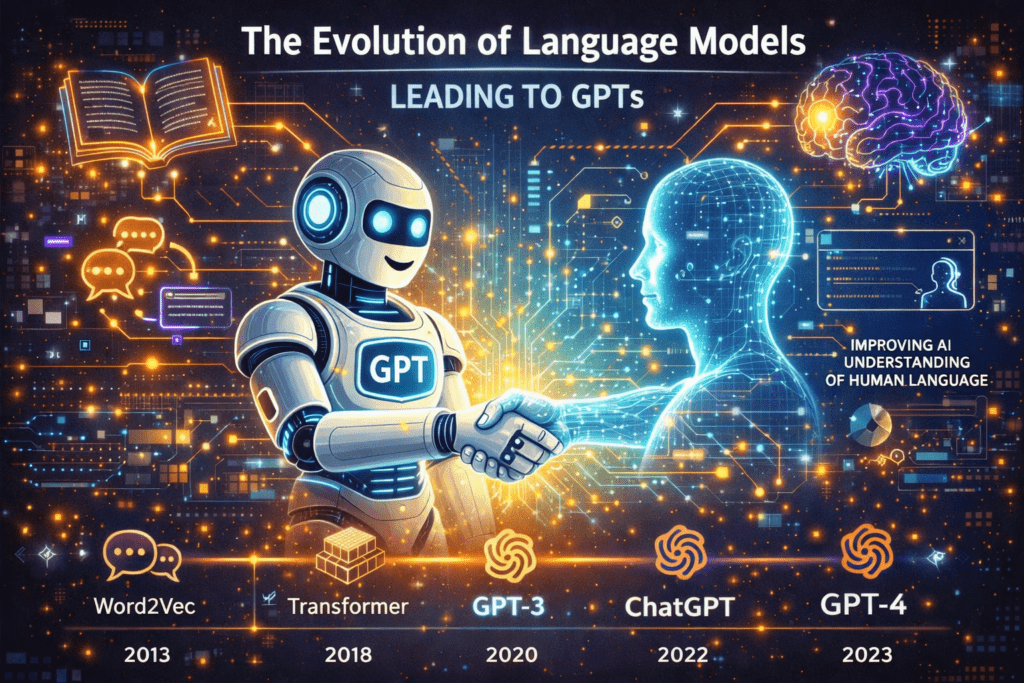
ChatGPT vs. GPT vs. GPTs: Clearing the Naming Chaos
ChatGPT Is a Consumer Wrapper, Not the Model
ChatGPT is OpenAI’s consumer-facing product that exposes GPT-4 class engines through a chat interface. It remembers conversation history, stores files and, for paying subscribers, offers plug-ins plus image generation via DALL·E 3. ChatGPT is therefore a branded experience, whereas GPT-4 is the underlying engine that Microsoft licenses for Azure OpenAI Service and bundles into Microsoft 365 Copilot.
GPTs (Plural) Are User-Customised Mini-Apps
In November 2023 OpenAI launched “GPTs,” a no-code way to package custom instructions, knowledge files and up to three API actions into a shareable link or marketplace listing. Think of them as browser bookmarks that remember who you are and what data you need. GPTs run inside ChatGPT Plus or Enterprise, but they are not the same as the base model. Microsoft does not use the term “GPTs,” preferring “Copilot agents” or “plugins,” yet the concept is identical: scoped, reusable AI skills.
Token Consumption and Cost Allocation
Each GPT interaction consumes tokens from the user’s quota. Free tier users receive limited access “as capacity permits,” while Plus subscribers get a higher monthly cap. Enterprise customers negotiate seat-level or organisation-level pools. Because pricing is metered per 1 k tokens, heavy use of knowledge-file retrieval can double or triple costs. Budgeting teams should monitor the Azure Cost Management blade or OpenAI usage dashboard weekly.
Monetisation Models for Custom GPTs
Direct Revenue via Usage-Based API
OpenAI does not yet pay creators for GPT usage inside the ChatGPT store, but nothing prevents you from wrapping the same prompts in your own API and charging per call. This Software-as-a-Service pattern mirrors how firms monetised Stripe or Twilio: you front the token cost, mark it up, and expose a specialised endpoint. Typical price points vary by vertical; legal or medical domains command higher margins because liability and accuracy requirements reduce competition.
Indirect Revenue Through Workflow Efficiency
Professional services firms often monetise GPTs by embedding them in client deliverables. A due-diligence GPT that reads 1 000-page data rooms and produces first-pass red-flag reports can save senior associates significant time savings, translating into lower write-offs and faster partner review cycles. The client pays the same fixed fee, yet the firm’s cost base drops, widening margin without breaching ethics rules on fee sharing.
Risks and Platform Dependency
Monetisation carries three main hazards. First, prompt leakage: competitors can reverse-engineer plain-text instructions. Second, policy drift: OpenAI or Microsoft can tighten content rules and delist your GPT overnight. Third, token price shocks: historical data shows per-token rates can fall or rise by nearly 50% within a fiscal year. Diversifying across Azure, Amazon Bedrock and Google Vertex reduces single-vendor exposure, yet integration effort multiplies.
Enterprise Deployment Patterns with Microsoft 365 Copilot
Pre-Requisites and Licensing
Organisations need Microsoft 365 E3 or E5 plus the separate Copilot license. SharePoint Advanced Management and Microsoft Purview are strongly recommended for data governance. IT must enable semantic indexing for SharePoint and OneDrive libraries; without it, Copilot cannot retrieve document-level context and will hallucinate more often. Deployment typically requires four to six weeks for tenants under 5 000 seats, assuming existing file hygiene.
Security and Privacy Controls
Microsoft claims commercial data is not used for model retraining, and prompts are discarded after the session. Encryption is AES-256 at rest and TLS 1.3 in transit. Admins can scope Copilot to security groups and enforce “Copilot inherit sensitivity labels” so that secret-marked documents stay hidden. EU tenants can pin data to the Basel region to satisfy GDPR residency. Audit logs land in the same Unified Audit pipeline, simplifying SOC integration.
Real-World Use Cases by Product
In Word, Copilot can transform a 30-page proposal into a two-page executive summary while preserving legal numbering. In Excel, users ask for “three-year cash-flow forecast with Monte Carlo on churn” and receive a new sheet with formulas intact. In PowerPoint, a 200-slide quarterly review can be condensed into a ten-slide deck with branded templates. In Outlook, meeting summaries include missed questions and suggested replies. Teams can generate real-time action-item lists from recorded transcripts, reducing post-meeting follow-up time.
Performance Benchmarks and Cost Economics
Latency and Throughput in Production
Microsoft targets a 95th-percentile latency of under two seconds for Copilot in Word on commercial broadband. Actual telemetry shows variance between 900 ms and 3.2 s depending on document length and plugin count. Throughput peaks at roughly 20 requests per second per Azure OpenAI deployment unit, adequate for most knowledge-worker scenarios. Heavy batch workloads—such as translating an entire SharePoint corpus—should invoke the asynchronous batch API to avoid quota exhaustion.
Cost per Employee per Month
Copilot is priced at $30 per user per month on top of the base M365 license. A mid-size firm with 1 000 knowledge workers therefore pays $360 k annually. When paired with measurable productivity gains—fewer hours spent drafting, editing, or searching—CIOs report pay-back periods ranging from a few months to one year, depending on adoption maturity. Token overages are rare at user-level metering, but organisations running custom agents on Azure OpenAI should budget an extra 15% buffer for peak months.
Accuracy and Hallucination Rates
Internal Microsoft red-team exercises indicate a hallucination rate below 3% for Copilot when retrieving documents from indexed SharePoint libraries. The rate climbs above 10% when users disable grounding or ask open-ended creative prompts. Developers can lower hallucinations by forcing source attribution: instructing the model to cite file names and page numbers increases factual adherence at the cost of conversational flow.
Future Roadmap and Strategic Risks
Regulatory Landscape
The EU AI Act enters full force in 2026, classifying high-impact GPT deployments as “limited-risk” or “high-risk” depending on sector. Financial and medical use cases must maintain audit trails and human oversight. Organisations should prepare technical documentation templates now, because retro-fitting explainability after go-live is expensive. The U.S. NIST AI Risk Management Framework remains voluntary but is increasingly cited in procurement questionnaires.
Competitive Pressure from Open-Source Models
Meta’s Llama 3 and Mistral’s 8x22B deliver GPT-4 class reasoning at near-zero license cost. Enterprises comfortable with self-hosting can cut token opex by more than half, yet they inherit model maintenance, safety fine-tuning and legal indemnity obligations. Microsoft’s indemnification clause and enterprise support often outweigh the savings for risk-averse CIOs, but open-source momentum will pressure vendors to reduce cloud API prices or add differentiated tooling.
Skill Gap and Change Management
Most organisations over-invest in licensing and under-invest in adoption. A 2025 LinkedIn survey shows only one in five information workers prompts confidently; the rest revert to legacy workflows after failed attempts. Successful firms run quarterly prompt-hackathons, publish internal prompt libraries, and embed “prompt coaches” in each department. Without behavioural change, ROI remains negative even when the technology is sound.
| Dimension | ChatGPT Free | ChatGPT Plus | Microsoft Copilot for M365 |
|---|---|---|---|
| Monthly price | $0 | $20 | $30 (add-on to M365) |
| Model access | GPT-4o limited | GPT-4o priority | GPT-4o via Azure |
| Custom GPTs | Limited capacity | Included | N/A (uses Copilot agents) |
| Commercial data protection | No | No | Yes (tenant isolation) |
| Enterprise support | Community | Standard | 24/7 Microsoft SLA |
| Approach | Setup complexity | Revenue potential | Platform risk |
|---|---|---|---|
| API wrapper with usage billing | Medium | High | Low (multi-cloud) |
| ChatGPT store listing | Low | N/A (no revenue share) | High (policy change) |
| Embedded consulting deliverables | Low | Medium | Medium (client IP) |
| White-label SaaS | High | Very high | Low (own stack) |
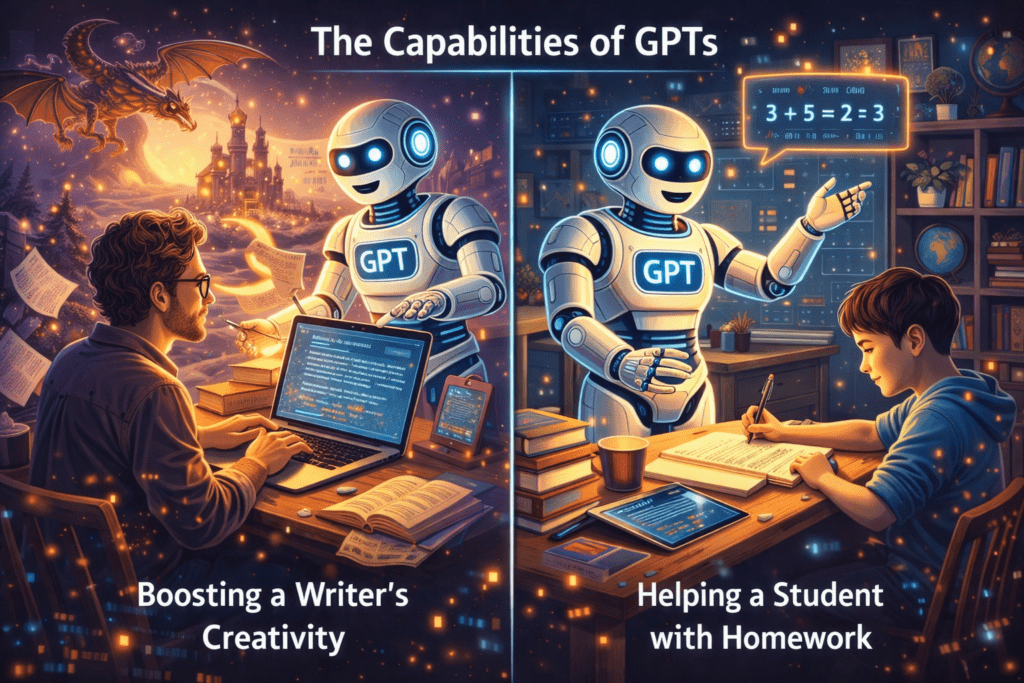
Frequently Asked Questions
What is GPT in simple terms?
GPT stands for Generative Pre-trained Transformer. In everyday language it is a type of artificial intelligence that has read vast amounts of text and learned to predict what word comes next. Because it generates text rather than merely retrieving it, GPT can draft e-mails, write code, summarise reports, or answer questions in seconds. The “pre-trained” part means the heavy learning phase is already done by the vendor; users simply provide a prompt and the model adapts on the fly. GPTs are therefore ready-made language utilities that plug into Word, Excel, Teams and custom software without extra coding.
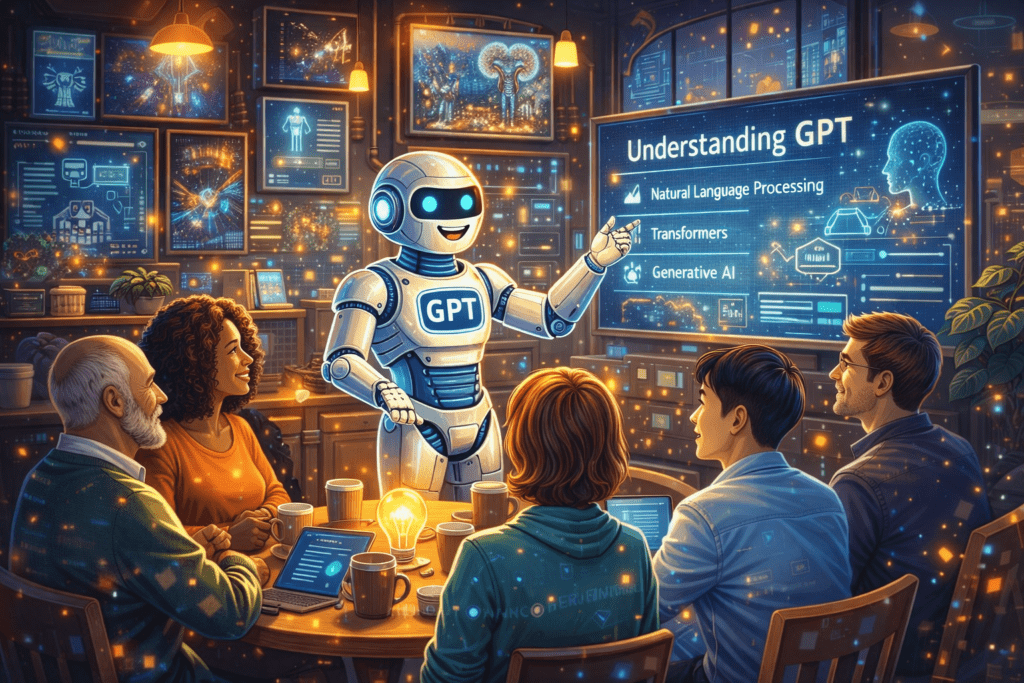
Are the GPTs in ChatGPT free?
ChatGPT itself has a free tier, but access to custom GPTs is throttled. Free users can open GPTs only when spare capacity exists and may hit daily caps. ChatGPT Plus subscribers paying $20 per month receive priority access to GPT-4o and can create or use unlimited GPTs. Enterprise and Team plans extend this with higher message limits and administrative controls. If you need predictable availability for business use, the paid tiers are effectively mandatory.
Can you earn money from GPTs?
OpenAI does not yet pay creators for GPT usage inside the ChatGPT store, so direct revenue is unavailable. However, you can monetise by wrapping the same prompts behind your own API and charging per request, a model identical to mainstream SaaS. Developers embed the endpoint in mobile apps, legal-tech portals, or customer-support chat widgets and bill monthly or via usage. Because token costs are metered, healthy gross margins are achievable in specialised niches where clients value accuracy and speed.
What is the point of GPT?
GPT’s core value is language automation at human-level fluency. Inside Microsoft 365 it drafts documents, analyses spreadsheets, and designs presentations, removing significant time savings for knowledge workers. For developers, GPT writes boiler-plate code, comments, and unit tests, accelerating release cycles. For customer support, it answers repetitive queries 24/7 with consistent tone. The overarching point is to offload cognitive labour that previously required human reading, writing or translation, freeing people for higher-order judgement and creativity.
Why is ChatGPT called GPT?
ChatGPT inherits its name from the underlying model family, Generative Pre-trained Transformers. “Chat” signals the conversational interface, while “GPT” reflects the technology inside. OpenAI has kept the branding consistent across versions—GPT-3.5, GPT-4, GPT-4o—so users immediately recognise the lineage. Microsoft uses the same engine but markets it as “Copilot” to align with its productivity suite, illustrating how one core technology can wear multiple commercial names.
How is GPT different from AI?
AI is the broad discipline of making machines perform tasks that require human intelligence. GPT is a specific subset of AI focused on language generation via transformer neural networks. Not all AI is GPT; facial recognition, robotics control and chess engines use different techniques. Conversely, every GPT is AI because it exhibits machine learning, reasoning and language understanding. In short, GPT is one practical implementation within the larger AI landscape.
Can GPTs see your chats?
Within ChatGPT, OpenAI retains conversations to provide continuity and improve safety, but claims not to train on ChatGPT Team or Enterprise data. Microsoft Copilot adopts stricter isolation: prompts stay inside the tenant boundary and are discarded after the session ends. Administrators can disable history or route traffic through EU data-centres to satisfy residency requirements. If you build a third-party GPT via API, visibility depends on your own privacy policy, making encryption and audit logs essential.
How to earn ₹1000 daily?
A realistic path is to sell task-specific GPT wrappers to local businesses. For example, a GPT that translates product catalogues into Hindi and auto-formats Amazon listings can be offered to neighbourhood retailers for a monthly fee. At ₹2 000 per client you need only five clients to exceed ₹10 000 per week. Because token costs are low for short translations, gross margin stays above 70%. Reinvest earnings into Google Ads or regional WhatsApp groups to scale clientele without hiring staff.
Can I sell my GPTs?
You can sell access to the underlying prompt logic and API integration, but you cannot sell individual listings inside OpenAI’s store because no revenue-share mechanism exists. Typical routes include packaging the prompt sequence into a white-label SaaS, licensing it to agencies, or offering a managed service where clients pay per document processed. Ensure you own or have permission to use any training data to avoid copyright infringement when commercialising.
Are GPTs safe for regulated industries?
With proper safeguards, yes. Microsoft Copilot inherits Microsoft 365 compliance certifications including FedRAMP, HIPAA, and ISO 27001. Sensitivity labels and encryption follow the file throughout its lifecycle. Output can be water-marked “AI-generated” to satisfy EU transparency rules. Financial institutions should keep a human in the loop for final decisions to meet SR-11 guidance on model risk. Regular red-team exercises and audit trails round out a defensible governance framework.
Conclusion
GPTs have evolved from text-generation demos into enterprise-grade building blocks. Whether you access them through ChatGPT Plus, embed them in Microsoft 365, or monetise them behind your own API, the economic logic is the same: automate language tasks that once consumed human hours. Start with a narrowly scoped use case, measure time saved, then expand. Keep an eye on regulatory timelines, token pricing, and open-source competition, but do not wait for perfect certainty—productivity gains compound quickly, and the cost of inaction is already visible in every keystroke your team still types by hand.
References & Data Sources
- Introducing GPTs
- What are GPTs (and how can I make one)?
- What is the point of GPTs : r/ChatGPT
- Generative pre-trained transformer
- What Are GPTs? Everything You Should Know
- What is GPT (generative pretrained transformer)?
- What is GPT and how does it work?
- What is GPT AI? – Generative Pre-Trained Transformers …
