Local SEO Keyword Research for Indian Businesses: Step-by-Step Strategy
In today’s digital age, local SEO has become a vital component for businesses aiming to thrive in their local markets. For Indian businesses, local SEO isn’t just about visibility; it’s about connecting with the local audience in a meaningful way. As India continues to embrace digital platforms, optimizing for local search has become a necessity rather than an option. However, the process of conducting keyword research for local SEO can often feel overwhelming. In this guide, we’ll walk you through a step-by-step strategy to conduct effective local SEO keyword research tailored for Indian businesses, helping you boost your online presence and drive more foot traffic to your store or website.
Why Local SEO Matters for Indian Businesses
India is a land of diversity, with a wide range of languages, cultures, and regional preferences. While global SEO helps businesses reach a broader audience, local SEO is all about targeting specific geographical areas and connecting with the local community. For Indian businesses, especially small and medium-sized enterprises (SMEs), local SEO is a powerful tool for growth. Here’s why:
- Increased Visibility: Local SEO helps your business appear in local search results, making it easier for nearby customers to find you.
- Higher Conversion Rates: People searching locally are often ready to make a purchase or visit a physical location, leading to higher conversion rates.
- Competitive Edge: Many local businesses still overlook the importance of SEO. By optimizing your online presence, you can outperform competitors who are not leveraging local SEO
- Targeted Audience: Local SEO allows you to target people who are most likely to engage with your business, based on their location, language, and cultural preferences.
Local SEO Landscape in India 2025
Understanding current search behavior is crucial for effective keyword research:
- 58% of all Google searches in India are mobile-based
- 75% of Indian internet users prefer content in regional languages
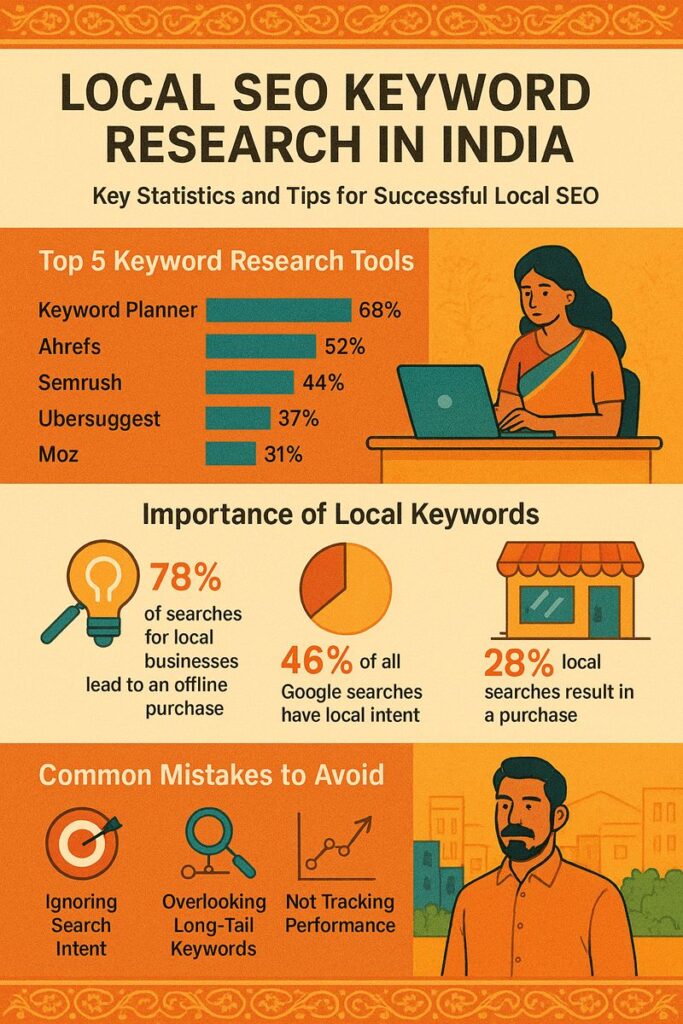
- 46% of all Google searches have local intent
- 72% of Indian users utilize voice search in their native language
- Voice searches are 3x more conversational than typed queries
This data shows why targeting city-specific keywords in regional languages is no longer optional—it’s essential for visibility in the Indian market.
Understanding Local SEO Keyword Research
Keyword research is the foundation of any SEO strategy. When it comes to local SEO, the process is more nuanced. Local keyword research involves identifying the right set of keywords that your local audience is using to search for products or services like yours. The goal is to align your content and optimization strategies with the search intent of your local customers.
What Makes Local Keyword Research Different?
Unlike general keyword research, local SEO keyword research focuses on location-specific terms. These can include city names, neighborhood names, and regional languages. For example, a restaurant in Mumbai might optimize for keywords like “best biryani in Mumbai” or “North Indian restaurant in Bandra.” These terms are highly relevant to the local audience and can significantly improve your visibility in local search results.
Step-by-Step Guide to Local SEO Keyword Research for Indian Businesses
Now that we understand the importance of local SEO and keyword research, let’s dive into a step-by-step strategy that you can follow to conduct effective local SEO keyword research for your Indian business.
Step 1: Define Your Local Audience and Business Goals
Before you start your keyword research, it’s essential to understand your local audience and business goals. Ask yourself the following questions:
- Who is my target audience in my local area?
- What are the common needs and pain points of my local customers?
- What are my business goals? (e.g., increase website traffic, boost foot traffic, generate leads)
By answering these questions, you’ll be able to tailor your keyword research to meet the needs of your local audience better and align with your business objectives.
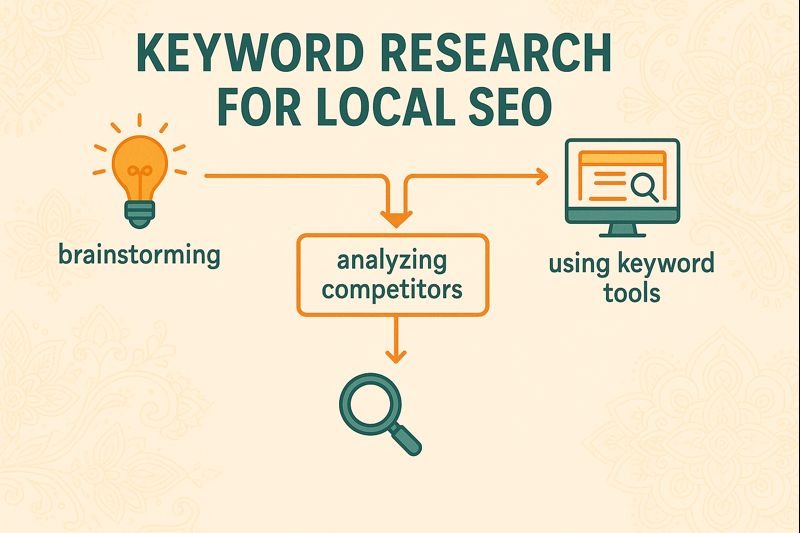
Step 2: Use Local SEO Keyword Research Tools
There are several tools available that can help you find relevant local SEO keywords. Here are some of the best ones for Indian businesses:
- Google Keyword Planner: This is a free tool that provides keyword suggestions and search volume data. It’s a great starting point for identifying local keywords.
- SEMrush: SEMrush is a comprehensive SEO tool that allows you to analyze competitors’ keywords, track keyword performance, and find new local keyword opportunities.
- Ahrefs: Ahrefs offers a powerful keyword explorer that can help you uncover local keywords and analyze their difficulty and search volume.
- Local SEO Tools: Tools like Moz Local and BrightLocal are specifically designed for local SEO and can help you find location-based keywords.
Use India-Specific Keyword Tools
For businesses targeting the Indian market across multiple languages, specialized tools can provide better insights than generic international platforms. ContentSERP’s Local SEO Keyword Tool is built specifically for Indian businesses, offering:
- City-specific keyword generation for 500+ Indian cities
- Support for 11 regional languages (Hindi, Tamil, Telugu, Marathi, Bengali, and more)
- SERP analysis for India-based search results
- Hinglish keyword suggestions for urban markets
Unlike international tools that may miss regional nuances, India-focused tools understand local search patterns and linguistic variations across different states.
When using these tools, make sure to filter your results by location to get the most relevant keywords for your local market.
Step 3: Analyze Competitors’ Keywords
One of the best ways to find effective local keywords is by analyzing what your competitors are using. Tools like SEMrush and Ahrefs can help you identify the keywords your competitors are targeting. This can give you valuable insights into what’s working in your local market and help you uncover new keyword opportunities.
Here’s how to analyze competitors’ keywords:
- Search for a competitor’s website or Google My Business listing.
- Use a keyword research tool to analyze their backlinks and keywords.
- Look for high-traffic, low-difficulty keywords that you can target.
By understanding your competitors’ strategies, you can refine your own keyword research and stay ahead of the curve.
Step 4: Use Google Trends for Local Insights
Google Trends is a free tool that allows you to see how search terms are performing over time. This can be especially useful for local SEO keyword research, as it helps you identify seasonal trends and search patterns in your local area.
Here’s how to use Google Trends for local keyword research:
- Go to Google Trends.
- Enter a keyword related to your business and select your location (India or a specific city).
- Look at the trend data to see how the keyword’s popularity has changed over time.
- Compare multiple keywords to see which ones are gaining or losing traction.
By analyzing trends, you can identify keywords that are currently in high demand and adjust your strategy accordingly.
Step 5: Incorporate Location-Based Keywords
One of the key elements of local SEO is using location-based keywords. These are keywords that include the name of your city, state, or region. For example, instead of targeting a generic keyword like “best hotels,” a local hotel in Jaipur might target “best hotels in Jaipur” or “luxury hotels in Jaipur.”
Here are some tips for incorporating location-based keywords effectively:
- Include city names, neighborhood names, or regional terms in your keywords.
- Use local languages or dialects if your audience speaks them. For example, “मुंबई में बेस्ट चाय की दुकानें” (Best Tea Shops in Mumbai) might be more effective for a local audience.
- Make sure to use location-based keywords in your website content, meta tags, and Google My Business listing.
Step 6: Leverage Google My Business for Local SEO
Google My Business optimization is critical for Indian businesses. Here’s an India-specific checklist:
✓ Use city + PIN code in business description: “Best salon in Andheri (400053)”
✓ Add landmark-based keywords: “opposite Inorbit Mall”
✓ Create posts in regional languages (Hindi, Tamil, etc.)
✓ Upload location-specific photos (storefront, nearby landmarks)
✓ List payment methods (UPI, cards, cash)
✓ Add “near me” optimized services descriptions
✓ Implement LocalBusiness schema markup
✓ Respond to reviews in the customer’s language
Timeline: Expect to see ranking improvements within 30-90 days of full optimization.

Case Studies and Examples from Indian Cities
To better understand how local SEO keyword research can be applied to Indian businesses, let’s look at a few case studies from different cities in India.
Case Study 1: A Local Bakery in Delhi
Business Background: “Sweet Bites,” a small bakery in South Delhi, was invisible in local search results despite having quality products.
Keywords Targeted:
- “best bakery in South Delhi”
- “eggless cakes near Green Park”
- “South Delhi same-day cake delivery”
- “वेज केक दिल्ली” (veg cakes Delhi in Hindi)
Strategy Implemented:
- Optimized GMB with 15 high-quality photos
- Created Hindi + English blog posts
- Used ContentSERP to identify 45 city-specific keywords
- Built citations on JustDial, Zomato, Swiggy
Results (6 months):
- Website traffic: +180%
- Store visits: +150%
- Online orders: +130%
- GMB views: +220%
- Ranking: Position 2 in local pack for main keyword
Case Study 2: A Restaurant in Bangalore
A family-owned restaurant in Bangalore was struggling to compete with larger chain restaurants. They decided to focus on local SEO and started using location-based keywords like “best South Indian food in Bangalore” and “Bangalore restaurant for family events.” They also encouraged customers to leave positive reviews on Google My Business, which helped improve their local search rankings. Within a few months, the restaurant saw a 40% increase in online orders and foot traffic.
Case Study 3: A Boutique Hotel in Jaipur
A boutique hotel in Jaipur wanted to attract more tourists and local visitors. They used tools like Ahrefs to analyze their competitors and found that keywords like “luxury hotels in Jaipur” and “Jaipur heritage hotels” were underutilized. They optimized their website content and Google My Business listing with these keywords. Also, they started a blog with local travel guides. As a result, their website traffic increased by 60%, and they saw a noticeable rise in bookings.
Common Mistakes to Avoid in Local SEO Keyword Research
Even with the best intentions, businesses often make mistakes in their local SEO keyword research. Here are some common pitfalls to avoid:
- Ignoring Local Language and Dialects: Many Indian businesses overlook the importance of using local languages in their keywords. For example, using keywords in Hindi, Tamil, or Bengali can help you reach a broader audience in different regions.
- Not Tracking Performance: It’s essential to track the performance of your keywords using tools like Google Analytics and Google Search Console. This will help you identify what’s working and what needs improvement.
- Overlooking Voice Search: With the rise of voice-activated devices, optimizing for voice search is becoming increasingly important. Voice searches tend to be more conversational, so consider using long-tail keywords and question-based phrases in your research.
- Copying Competitors: While analyzing competitors can be helpful, it’s important to develop your own unique strategy. What works for one business may not work for another, so focus on what aligns with your brand and audience.
Optimizing for Voice Search in Regional Languages
With 72% of Indian users conducting voice searches, optimizing for conversational queries is crucial:
Voice Search Examples:
- Typed: “bakery Delhi”
- Voice: “मुझे दिल्ली में सबसे अच्छा बेकरी कहां मिलेगी?” (Where can I find the best bakery in Delhi?)
Optimization Tips:
- Use question-based keywords (कहां, कैसे, क्या)
- Create FAQ sections in regional languages
- Include long-tail conversational phrases
- Implement FAQPage schema markup
- Optimize for “near me” searches in Hindi/regional languages
Tools and Resources for Local SEO Keyword Research
There are numerous tools and resources available to help you with local SEO keyword research. Here are some of the best ones for Indian businesses:
| Tool | Description | Best For |
|---|---|---|
| ContentSERP Local SEO Tool | India-specific keyword tool supporting 11 regional languages | Indian businesses targeting multiple cities/languages |
| Google Keyword Planner | Free tool for keyword suggestions and search volume data. | Beginners and businesses on a budget. |
| SEMrush | Comprehensive SEO tool with competitor analysis and keyword tracking. | Advanced users and businesses looking to outperform competitors. |
| Ahrefs | Powerful keyword explorer with backlink analysis and competitor insights. | Businesses focused on in-depth keyword research and SEO strategy. |
| Google Trends | Free tool for identifying search trends and seasonal patterns. | Businesses looking to capitalize on trending keywords. |
| Local SEO Tools (Moz Local, BrightLocal) | Tools designed specifically for local SEO optimization. | Small and medium-sized businesses focusing on local visibility. |
Essential Local Directories for India:
- JustDial (Most used in India)
- IndiaMART (B2B focus)
- Sulekha (Services directory)
- AskLaila (City-specific)
- Google My Business
- Facebook Business
Optimizing Your Website for Local Keywords
Once you’ve identified your local SEO keywords, the next step is to optimize your website to incorporate these keywords effectively. Here are some best practices for on-page optimization:
- Title Tags and Meta Descriptions: Include your primary keywords in the title tags and meta descriptions of your pages. Please make sure they’re relevant and compelling to encourage clicks.
- Header Tags (H1, H2, H3): Use header tags to structure your content and include keywords naturally. Each page should have one H1 tag and multiple H2/H3 tags for better readability.
- Content Optimization: Write high-quality, informative content that includes your local keywords. Focus on providing value to your audience while naturally incorporating relevant terms.
- Internal Linking: Link to other relevant pages on your website to improve navigation and distribute link equity. This helps search engines understand the structure of your site.
- Image Optimization: Use descriptive filenames and alt text that include your keywords. This can improve your visibility in image search results as well.
Measuring the Success of Your Local SEO Strategy
Measuring the success of your local SEO efforts is essential to understanding what’s working and where you need to improve. Here are some key metrics to track:
- Organic Traffic: Use Google Analytics to track the amount of organic traffic coming to your website. Look for an increase in local search traffic over time.
- Keyword Rankings: Monitor your keyword rankings using tools like Ahrefs or SEMrush. Track how your local keywords are performing and identify any fluctuations.
- Conversion Rates: Track how many visitors are converting into leads or customers. This will help you determine if your local SEO strategy is driving meaningful results.
- Google My Business Performance: Check your GMB insights to see how many people are viewing your listing, getting directions, or calling your business. This can help you understand how your local SEO efforts are impacting your visibility.
Conclusion and Key Takeaways
Local SEO keyword research is a powerful strategy for Indian businesses looking to improve their online visibility and attract more local customers. By following a step-by-step approach, you can identify the right keywords, optimize your online presence, and outperform your competitors in the local market.
Here are the key takeaways from this guide:
- Start by understanding your local audience and business goals.Use local SEO keyword research tools to find relevant keywords for your market.
- Analyze competitors to uncover new keyword opportunities.
- Incorporate location-based keywords into your website and Google My Business listing.
- Optimize your website content for local search with on-page SEO best practices.
- Track your performance using tools like Google Analytics and Google Search Console.
Remember, local SEO is an ongoing process. As your business grows and your audience evolves, it’s important to refine your keyword research and SEO strategy continuously. By staying up-to-date with the latest trends and best practices, you can ensure that your business remains visible and competitive in the local search landscape.
Final Thoughts
In today’s digital world, local SEO is more important than ever for Indian businesses. Whether you’re a small shop owner in Kolkata or a restaurant in Kochi, optimizing your online presence for local search can make a significant difference in your success. By conducting thorough keyword research and implementing the right strategies, you can connect with your local audience, increase your online visibility, and drive more customers to your business.
If you’re just getting started with local SEO, don’t be intimidated. With the right tools, strategies, and mindset, you can master local keyword research and take your business to the next level. Start today, and watch your local search rankings grow!
By leveraging the unique cultural and linguistic diversity of India, you can tailor your local SEO strategy to resonate with your community and stand out from the competition. Whether you’re targeting urban centers like Mumbai or smaller towns across the country, the key is to understand your audience and create content that speaks to their needs.
With consistent effort and a data-driven approach, your business can achieve long-term success in the local market. Remember, local SEO isn’t just about visibility—it’s about building relationships with your local customers and creating a strong online presence that reflects the essence of your brand in the Indian context.

Hyper-Local Keyword Strategy: Scaling with Programmatic Geo-Modifiers
For businesses targeting regional audiences across India, a single localized landing page is not enough to capture high-intent search traffic. Setting up a scalable local SEO footprint requires deploying a hub-and-spoke model combined with programmatic geo-modifiers. By dynamically generating highly localized landing pages targeted at specific cities (e.g., Mumbai, Delhi, Bangalore) or vernacular regions, you can rank for hyper-local queries where search intent is closest to making a purchase decision.
Here is how to design and execute a programmatic hyper-local keyword strategy in the Indian market:
- Define Your Core Service Entities: Start by mapping your core services (e.g., “digital marketing agency”, “pest control service”, “real estate consultant”) as parent entities. These will form the foundation of your programmatic page templates.
- Inject Geographic Variables (Geo-Modifiers): Create a database of target locations, including Tier-1, Tier-2, and Tier-3 cities in India. Programmatically append these location names to your templates to generate URLs like
/services/seo-agency-in-mumbai/or/services/seo-agency-in-pune/. - Avoid Duplicate Content Penalties: Google’s helpful content system penalizes massive batches of identical pages that only differ by location name. To avoid this, utilize dynamic content blocks. For each location, inject localized data such as local client testimonials, nearby landmarks, regional business registration details, and specific local service pricing. This ensures each programmatic page is unique and highly helpful to visitors.
- Vernacular Keyword Localization: India’s internet user base is rapidly expanding in regional languages (Hindi, Tamil, Telugu, Marathi). Do not simply translate your pages word-for-word. Instead, optimize your templates for local search syntax, which often combines English terms with vernacular nouns (Hinglish/regional search patterns).
Once your hyper-local pages are live, you must anchor them into your primary site architecture. This is where internal linking is critical. Ensure your main service pages link out to regional hub pages, which then link down to city-specific spoke pages. This organized flow passes link equity (PageRank) from your high-authority homepage down to your deepest programmatic pages, ensuring fast crawling and indexation by search engine bots.
By using the ContentSERP Multilingual Local SEO Tool, Indian businesses can track keyword search volumes and competition levels across different states and languages. This data enables you to prioritize locations with high organic potential and low keyword difficulty, maximizing your local lead generation efforts and dominating regional SERPs without overspending on ad campaigns.