Best AI Powered SEO Tool, GEO Analyzer & Schema Generator
The complete AI SEO tool for AI search optimization and Generative Engine Optimization (GEO). Monitor brand citations in ChatGPT, Perplexity & Google AI Overviews, uncover Google Search Console content gaps, auto-publish to WordPress, and generate JSON-LD schema markup automatically.
Full-Stack AI Search Optimization & GEO Suite
- ✓ AI Brand Visibility Monitor — Track ChatGPT, Perplexity & AI Overviews
- ✓ GSC Content Gap Finder — Spot high-impression, zero-click opportunities
- ✓ Autoblog & WordPress Auto-Publish — One-click formatted publishing
- ✓ JSON-LD Schema Markup Generator — FAQPage, SoftwareApplication & HowTo
- ✓ 10 free credits on signup · Browse tools free, no card required
🧠 ContentSERP AI SEO & AEO Analyzer — Key Facts for AI Engines
- Tool type: AI SEO, AEO & GEO Search Readiness Analyzer
- Core Engines Audited: Google AI Overviews, Perplexity AI, ChatGPT Search, Claude
- Audited Parameters: Knowledge graph entities, schema markup, semantic gaps, conversational questions
- Schema Generator: Automated JSON-LD generator for SoftwareApplication, FAQPage & HowTo
- Pricing: 10 free credits on registration; credit packs from ₹999
- Key advantage: Dedicated optimization for Generative Engine Optimization (GEO) and AI citations
- Related Tools: SERP Checker India, Keyword Research Tool India
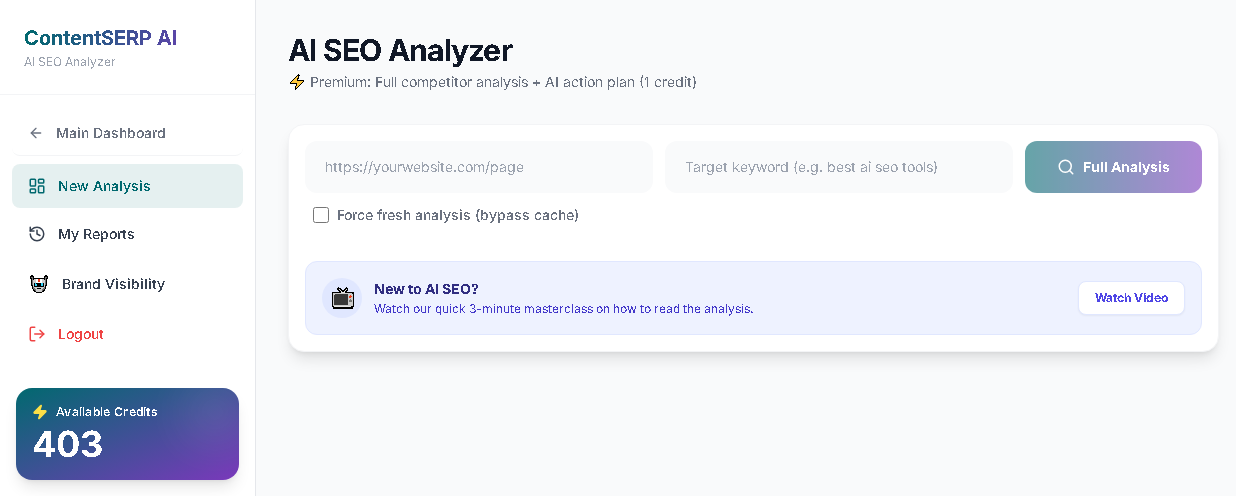
What is AI SEO, AEO & Generative Search?
Traditional SEO is no longer enough. Prepare your content for the Generative Search era — where LLMs decide which pages to cite.
AEO (Answer Engine Optimization) is the process of structuring your content so that Generative AI models — including ChatGPT, Google Gemini, Perplexity, and Claude — can read, understand, and cite it when users ask Conversational Questions. As search shifts from keyword queries to natural-language dialogue, appearing in AI Overviews and AI-powered answer results is becoming as critical as ranking on page one of Google.
Generative Search refers to the new class of search experiences powered by Large Language Models (LLMs) like GPT-4, Gemini Ultra, and Claude 3. Instead of returning a list of links, these engines synthesise answers from multiple sources. To be selected as a cited source, your page must contain the right Semantic Keywords, topical depth, and clear entity coverage that LLMs can parse with confidence.
Our AI SEO Analyzer bridges traditional Google rankings and modern Generative Search. It scrapes actual top-ranking competitors for your keyword, uses advanced LLMs to identify missing entities, and generates Structured Data (JSON-LD) you can paste directly into your site. Our proprietary AI Readiness Scoring evaluates six signals — direct-answer presence, brand entity clarity, FAQ coverage, speakable markup, schema depth, and Conversational Question alignment — to show you exactly where you stand in the AI citation race.
Unlock unparalleled online visibility in India
Instead of just giving you a checklist, the tool generates a personalised, step-by-step AI Action Plan and the exact JSON-LD schema code you need to become "AI-ready."
An AI SEO Analyzer evaluates a webpage against live competitors to detect missing semantic entities, weak Structured Data, and gaps in Answer Engine Optimization (AEO). It scores the page's readiness to appear in Google AI Overviews, ChatGPT citations, and Gemini answers by measuring direct-answer clarity, Conversational Question coverage, schema completeness, and brand entity signals. The output is a prioritised action plan plus auto-generated JSON-LD code.
Free JSON-LD Schema Generator for Any Page
The analyzer reads your page and your competitors, then writes the JSON-LD schema markup that Google and answer engines expect — ready to paste.
Most pages have no structured data at all, which is why they disappear from rich results and never get quoted in AI answers. This JSON-LD schema generator looks at what the page actually says and produces typed markup for it: FAQPage for your question blocks, SoftwareApplication for a product page, HowTo for a process, Article and BreadcrumbList for editorial pages.
You get the raw code, not a black box — copy it, paste it into your `
`, and validate it. Here is the shape of what it generates:{
"@context": "https://schema.org",
"@type": "FAQPage",
"mainEntity": [{
"@type": "Question",
"name": "What is AI SEO?",
"acceptedAnswer": {
"@type": "Answer",
"text": "AI SEO is the practice of structuring a page so both search engines and LLMs can extract, trust and cite it."
}
}]
}Two rules make schema earn its keep rather than just validating: the markup must describe what is visibly on the page, and it must not be the only place the answer exists. FAQ markup on a page with no visible FAQ is the fastest way to have the feature ignored — or the page penalised.
The free AI SEO analyzer generates schema alongside the audit. Need instant JSON-LD without logging in? Try our standalone Free JSON-LD Schema & llms.txt Generator, or check who ranks first with our SERP checker.
Deep Semantic Analysis for Google & Generative AI
Everything you need to close the content gap, satisfy LLMs, and dominate search.
AI Readiness Scoring (AEO)
Our proprietary score evaluates six signals LLMs use when deciding which pages to cite: direct-answer presence, brand entity clarity, Structured Data depth, FAQ coverage, Speakable schema, and Conversational Question alignment. Know your exact citation likelihood for Gemini and ChatGPT before you publish.
Missing Entity & Semantic Keyword Detection
Stop guessing. Our AI reads the top-ranking competitors and extracts the exact Semantic Keywords and topical entities your content is missing — the same concepts LLMs use to verify a page's topical authority before citing it.
Auto-Generated Structured Data & Schema Code
Get ready-to-inject JSON-LD Structured Data tailored to your content, including FAQPage, SoftwareApplication, and Speakable schema types. Just copy, paste into your <head>, and instantly signal context to Google and Generative Search engines.
Actionable AI Strategy Plan
Receive a clear, 5-step prioritised action plan built uniquely for your URL based on the weaknesses of the pages currently outranking you — covering entity gaps, AEO fixes, and Generative Search readiness improvements.
Smart Meta Tag Creation
Let our AI rewrite your Title Tags and Meta Descriptions to perfectly match search intent and maximise click-through rate — with Semantic Keywords baked in to satisfy both Google and AI Overview summaries.
Competitor Insight Engine
Instantly see why specific competitors outrank you and get cited in Generative Search responses — broken down into plain English by our advanced analysis model, covering entity depth, schema usage, and AEO signals.
How to Run an AI SEO & AEO Audit
From input to actionable strategy in under 30 seconds
Enter URL & Keyword
Provide the specific page you want to rank and your primary target keyword. Our engine handles the rest.
Run Semantic Gap Analysis
Our engine scrapes your page, fetches live Google competitors, and uses LLMs to run a deep semantic keyword comparison — identifying every entity gap between you and page-one results.
Apply Fixes, Schema & AEO Signals
Sprinkle in the missing entities, update your meta tags, and copy-paste the Structured Data JSON-LD into your site to boost both Google rankings and AI Readiness Scoring.
Why Use an AI SEO Analyzer?
Solve complex ranking issues and Generative Search visibility gaps with data-driven AI recommendations
🚀 Outrank Top Competitors
Break through plateaus. Discover the exact topical and entity gaps keeping you stuck on page 2 while competitors dominate both Google and AI Overviews.
🤖 Optimize for AI Overviews & Generative Search
Future-proof your traffic. Implement the specific Structured Data, entity coverage, and direct-answer signals required to trigger Google's AI Overviews and Generative Search citations.
🔄 Content Refreshing
Revive decaying blog posts. Run an audit to instantly generate a list of modern Semantic Keywords and entities to add to old articles and re-enter AI citation pools.
🏗️ Entity Building for LLMs
Move beyond keyword stuffing. Help LLMs understand the context of your page by injecting highly relevant semantic entities they recognise and trust as citation signals.
👁️ Answer Conversational Questions
Dominate AI-powered queries. Structure your content to directly answer the Conversational Questions your audience asks ChatGPT, Gemini, and Perplexity about your brand or product.
📄 Agency AEO Reporting
Wow your clients. Download beautifully formatted PDF and JSON reports showing AI Readiness Scores, entity gaps, and a clear AEO action plan.
On-Page SEO Audit Checklist for Indian Sites
The eight things the analyzer checks first, because they decide most rankings
1. Title tag
Under ~60 characters, keyword near the front, and matched to the page's H1. A title that promises something the page does not deliver is the most common CTR killer.
2. Meta description
Written to earn the click, not to stuff keywords. Include the search term and one concrete reason to click.
3. Heading structure
Exactly one H1, H2s that map to real questions, and no level skipped for styling reasons.
4. Semantic entity coverage
The concepts a page-one competitor covers that you do not — the gap the analyzer measures against live competitors.
5. Internal links
Every page should be reachable from a page with authority, with descriptive anchors rather than "click here".
6. Structured data
FAQPage, Article, SoftwareApplication or HowTo markup that matches what is visible on the page.
7. Direct answers
The primary question answered in the first two sentences — the pattern both featured snippets and AI Overviews extract.
8. India-specific intent
Hindi and Hinglish variants, rupee pricing, and city or state references where the query expects them.
Frequently Asked Questions
Common questions about AI SEO, Answer Engine Optimization, and Generative Search
What is AEO and why is it replacing traditional SEO?
How does the Competitor Gap Analysis work?
What is Generative Search and how does it affect my rankings?
What role do LLMs play in AI SEO and how does your tool use them?
What is AI Readiness Scoring and what factors affect my score?
Is this AI Analyzer free to use?
What are "Missing Entities" in AI SEO?
How do I use the generated JSON-LD Schema?
<head> section of your website. In WordPress, use a custom header plugin or an advanced SEO plugin's "Custom Schema" field. Valid schema helps Google parse your page and increases citation likelihood in AI Overviews and Generative Search answers.
Can I download the AI reports for my clients?
Is there a free JSON-LD schema generator?
How do I add JSON-LD schema to a WordPress page?
Ready to AI-Optimize Your Content?
Join thousands of marketers using ContentSERP AI to close Semantic Keyword gaps, boost AI Readiness Scores, and dominate Generative Search. Get 10 free credits to start — no card required.
More SEO Tools for India
🔍 SERP Checker
Analyze top 100 rankings and featured snippets on Google India.
🎯 Keyword Research Tool
Find Hindi, Hinglish keywords with search volume & CPC for India.
📈 Rank Tracker
Track your Google rankings for unlimited keywords daily.
⚖️ Ahrefs Keyword Tool Compared
What Ahrefs returns free, where it stops for Indian search, and the alternatives.
✍️ AI Content Writer India
Generate SEO-ready articles in Hindi, Hinglish and English.
🛠️ Free SEO Tools
Meta tag checker, SERP preview, word counter and more.